
white oak greed

[a free-to-all subscriber posts, mostly about struggling with a twisted white oak…I will have chairmaking posts to follow.]
A slow spring migration season for me. The best photo I’ve got so far is not of a migratory bird - this barred owl (Strix varia) flew right past me last week, then sat up for some photos.

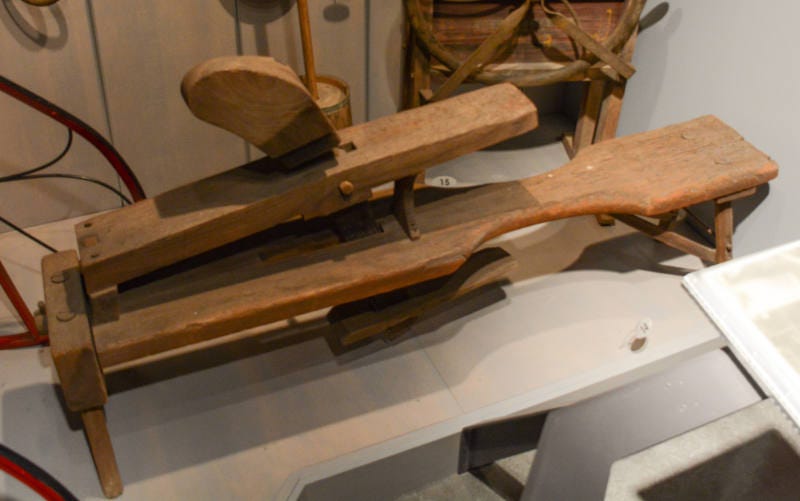
Now to woodworking. First off, a follow-up on that schnitzelbank post from last time. I was over-thinking it. Not surprising. David Scofield of the Meadowcroft Rockshelter and Historic Village in Avella, Pennsylvania sent a link to one in that collection. His note set me straight on how (mostly) it works:
I read your Substack this morning with great interest as we have in our collection, a shaving horse with the same self-leveling assembly you described. A photo of it maybe found here . It is the only one I had ever seen with that feature until I read your post. Unfortunately, there is no provenance associated with that piece so I don’t know where it originated from. The round, projecting tenon is just that, it is a rounded projection of one substance with the seat plank which the leg assembly rotates upon. There is a wooden pin through the tenon to retain the leg assembly. That’s it. Pretty simple yet apparently effective. I have never reproduced it to learn how well it functions.
Here’s one of the photos from his link:
Alexander used to always say “more will be revealed.” Now - on to greed, lust & stupidity. White oak.
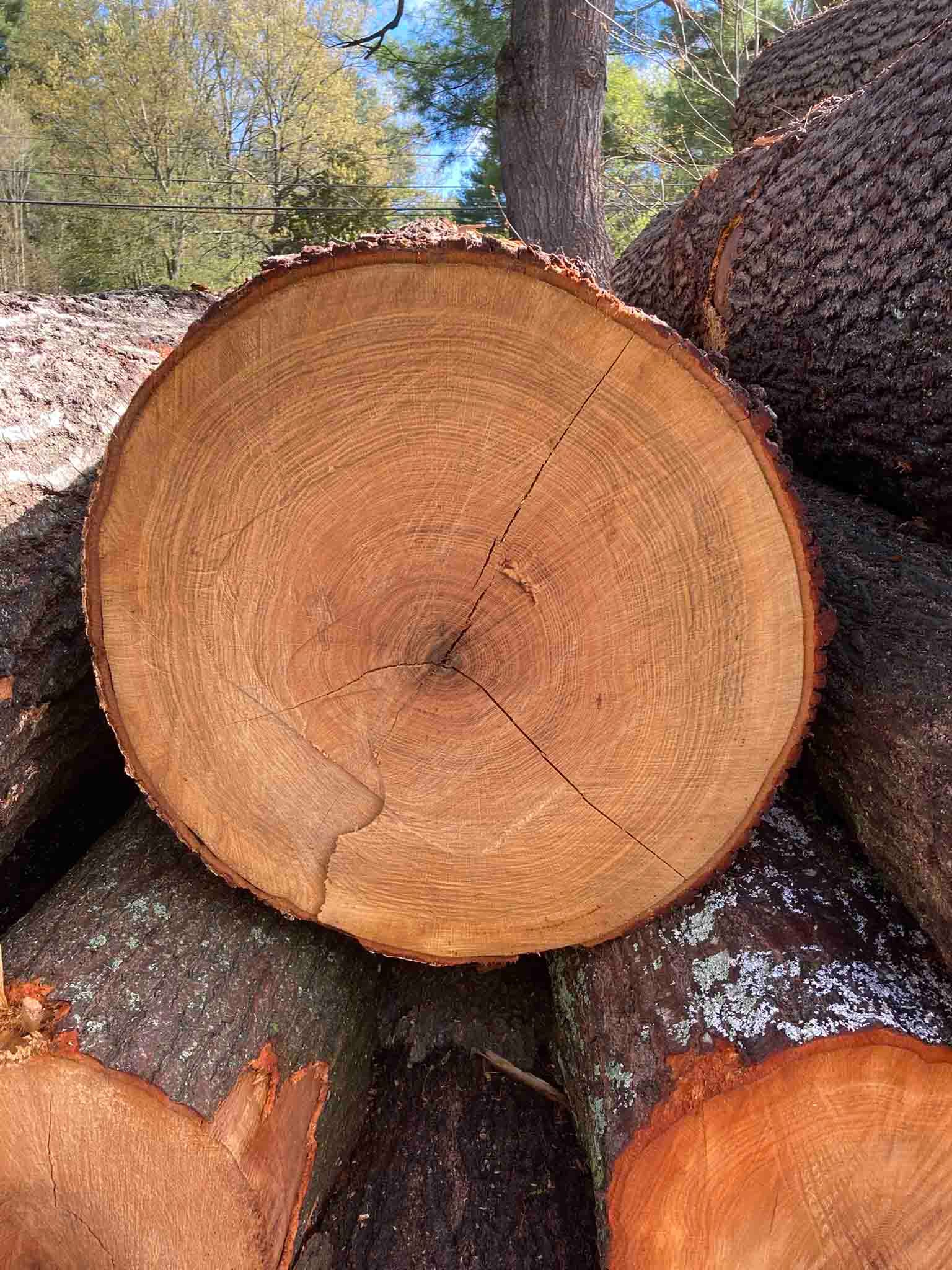
Daniel O’Hagan called it the king of woods. It was Jennie Alexander’s favorite timber for her post and rung chairs. When I used to make Windsor chairs and baskets it was my preferred wood for the bent parts. Here in southeastern Massachusetts I don’t often find it, mostly what I work with are the red oaks (confusingly for some, these include black oak - I muddy the issue with the fellow we buy logs from when I lump the two together. He gets a higher price for red vs black. So I should remember to call them all black oaks…) Recently I was out shopping for a new log and found an 8 foot length of white oak about 28” in diameter. And that’s where greed & lust bit me in the ass. I could see that the bark had a bit of a spiral to it which tells me that the log was twisted. But I convinced myself that it would be perfect for chair parts - “it’s white oak - it’ll be worth the trouble.”
Because chair parts are small cross-sectioned stuff - the JA posts I make are 1 3/8” when green - I figured the problems would be minimal. But there’s a lot of work before you get to making chair posts. As it happened the log was just the devil to try to open. I used every wedge I had and then some just to get it in half. My first attempt was to split the whole 8 foot log in half. Failed miserably. I pulled all the wedges out and a kind person skilled with a big chainsaw cross cut the log at 5 feet/3 feet. That made the splitting a bit easier but only a bit.
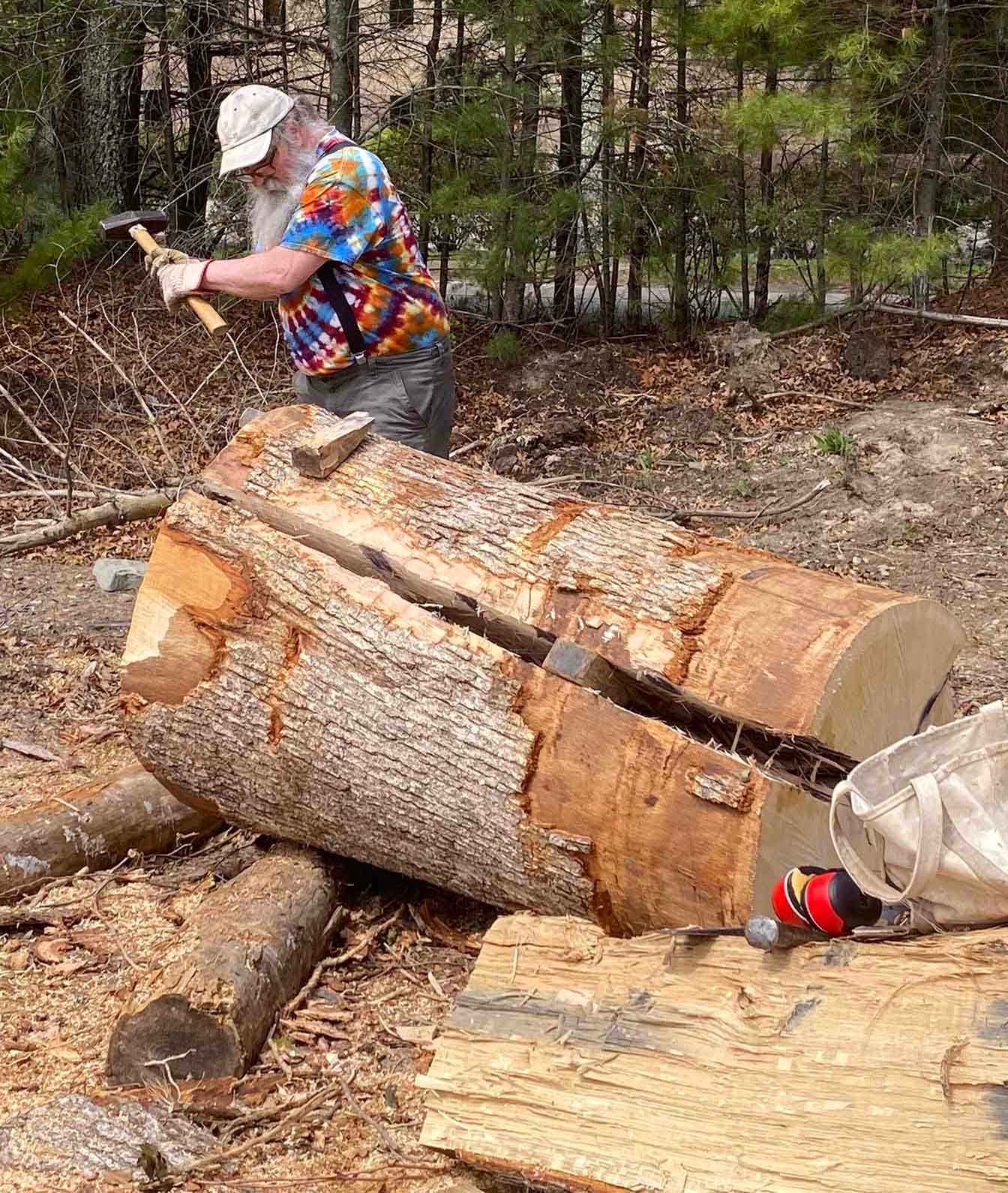
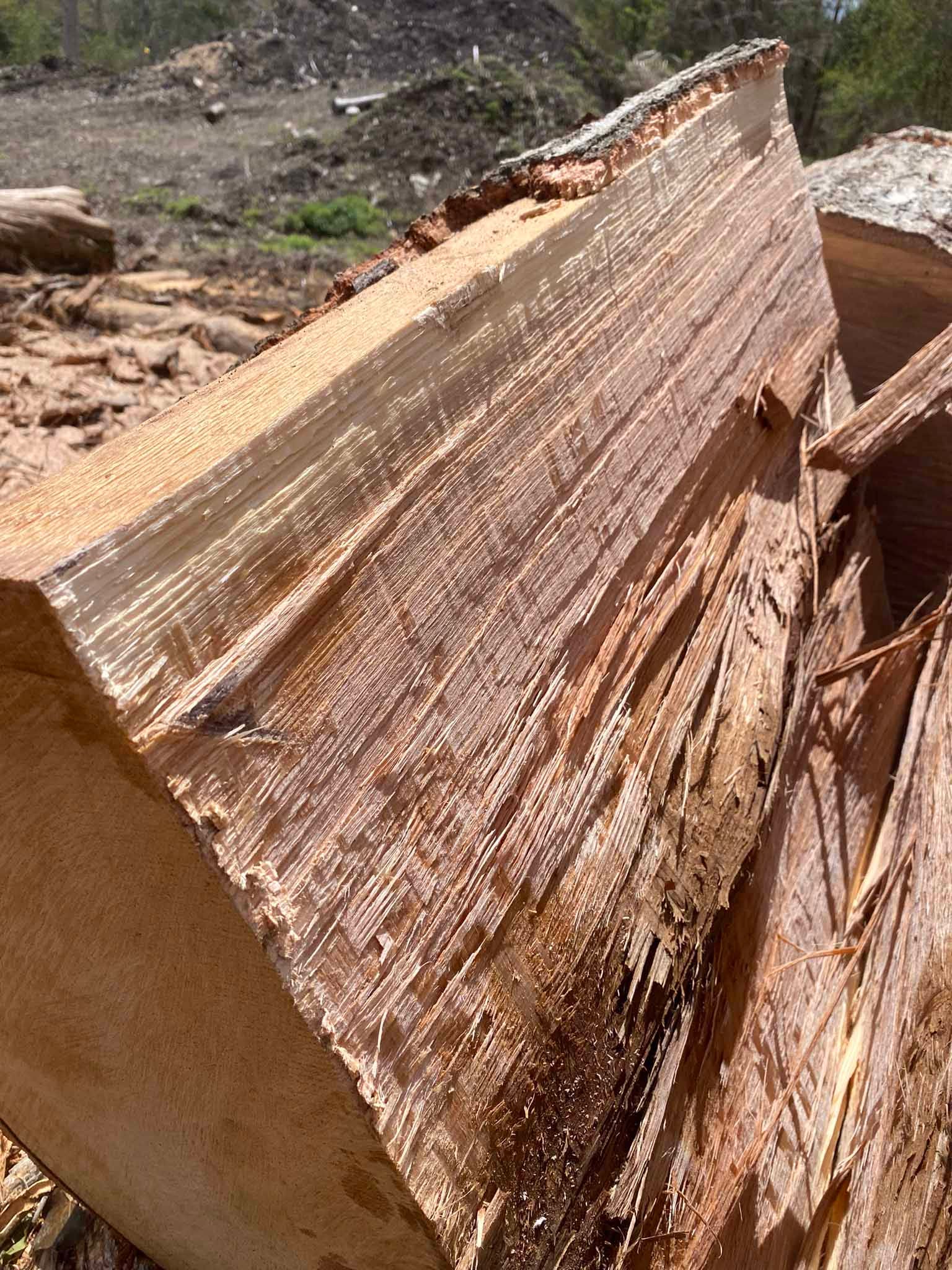
This shot below you can see the spiral/twist - the way the split dives down:
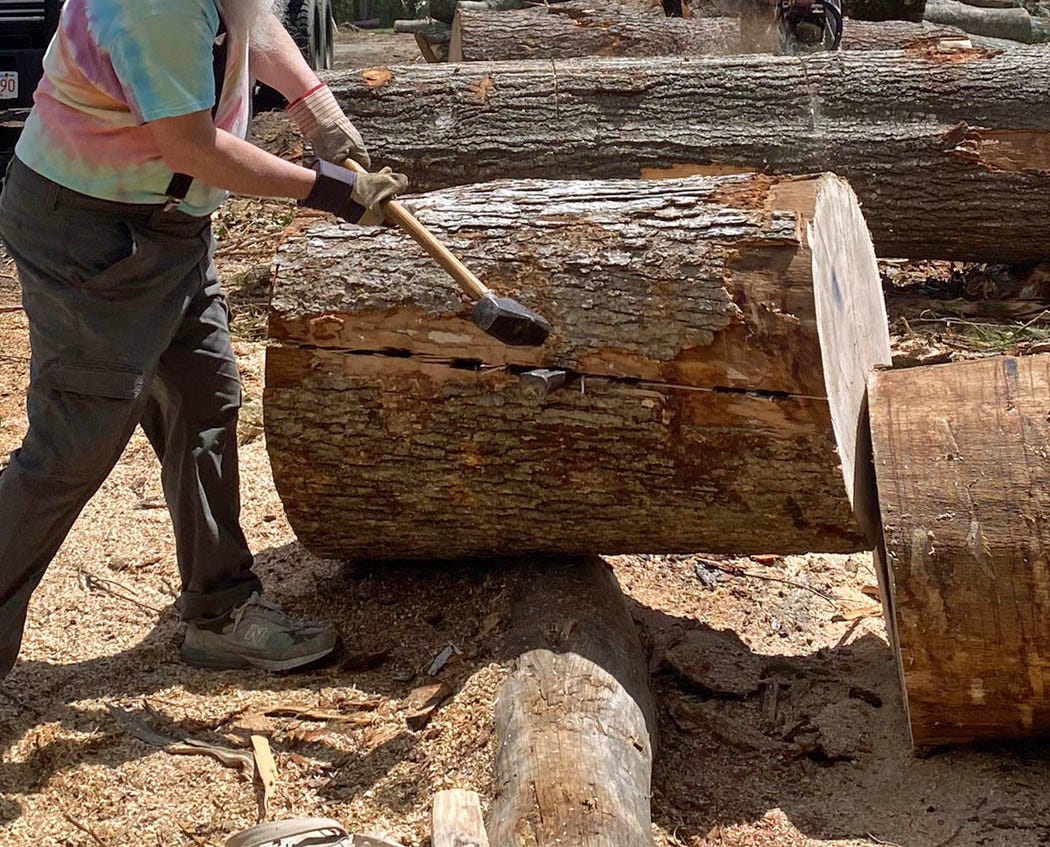
But I knew from experience that the following splits would get easier. Finally they did. I split them into eighths of the log and then split off the inner juvenile wood. Some of the shorter stuff, destined for front posts of chairs - was a walk in the park to split.
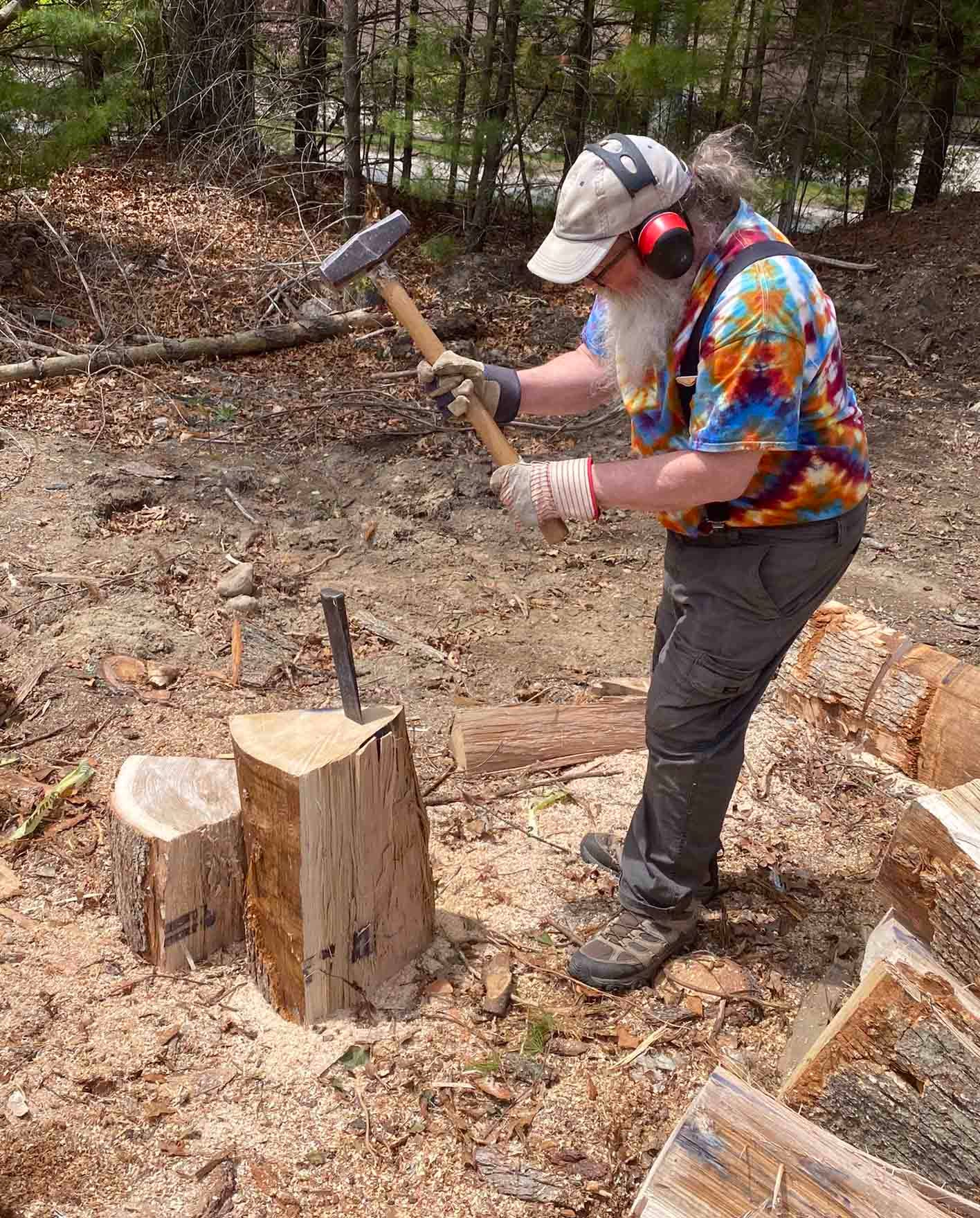
I don’t split the entire log all in one setting, it’s too much work. Nor do I own a truck so I’m limited by what I can slide into my old beat up SUV. Once the vehicle is filled I drive home and drop those pieces from the road down into my yard where I work my green wood. I got a chance to split & shave up a bunch of that wood and all of the finer splits done with the froe were nearly perfect.
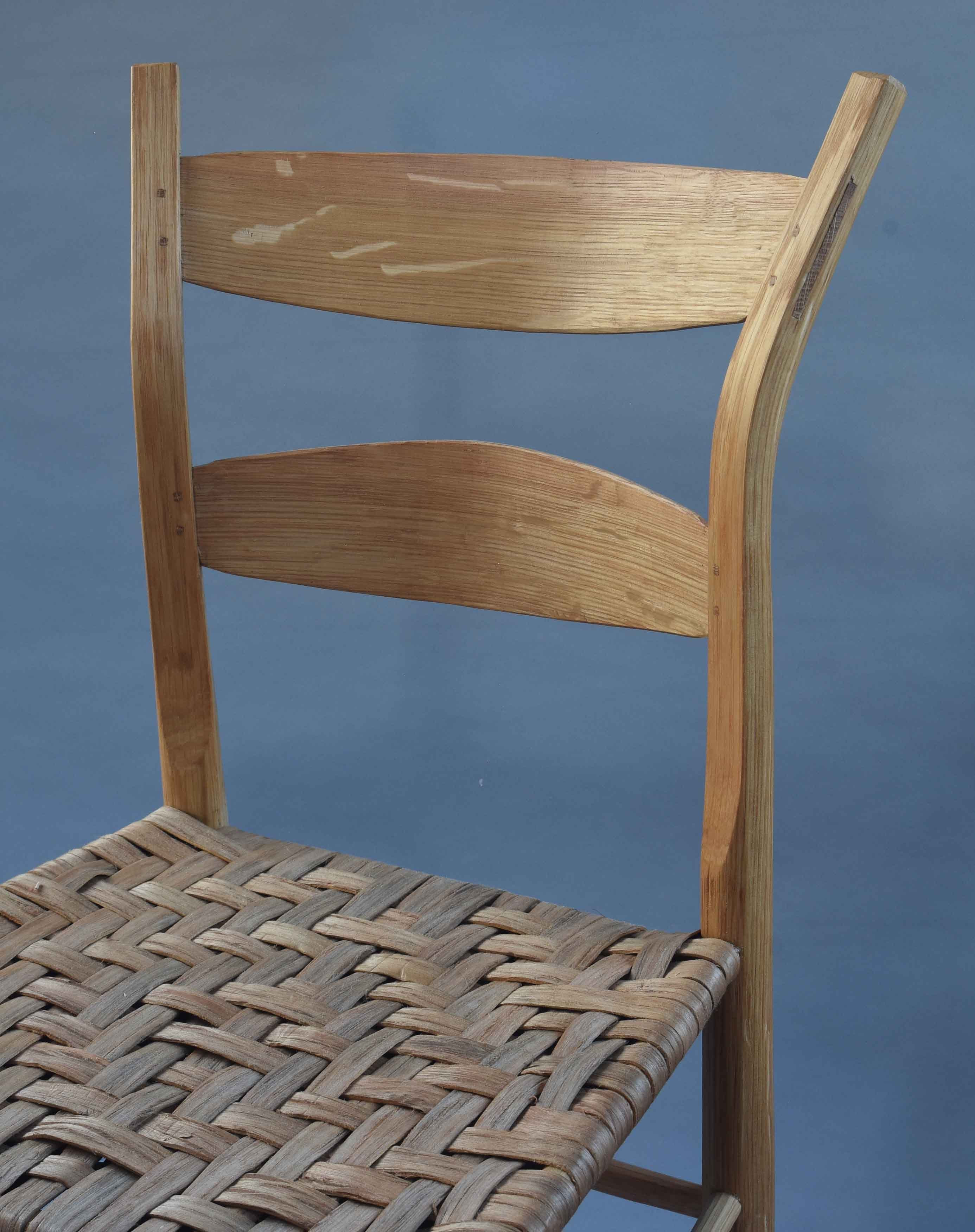
I pull down one of those split sections and sort out what it’s destined to be. I focused on the rear posts - the most demanding pieces in the chair. Finished at 34” x 1 3/8” diameter. These posts bend between the slats:
I steam the shaved posts prior to bending. The steam box I have holds six posts at a time so enough for three chairs. Once I had the six posts shaved I set up the steam box and ran the wallpaper steamer through it. I let the posts sit in the steam for about 45 minutes and then pull them out two at a time and put them in the bending forms.
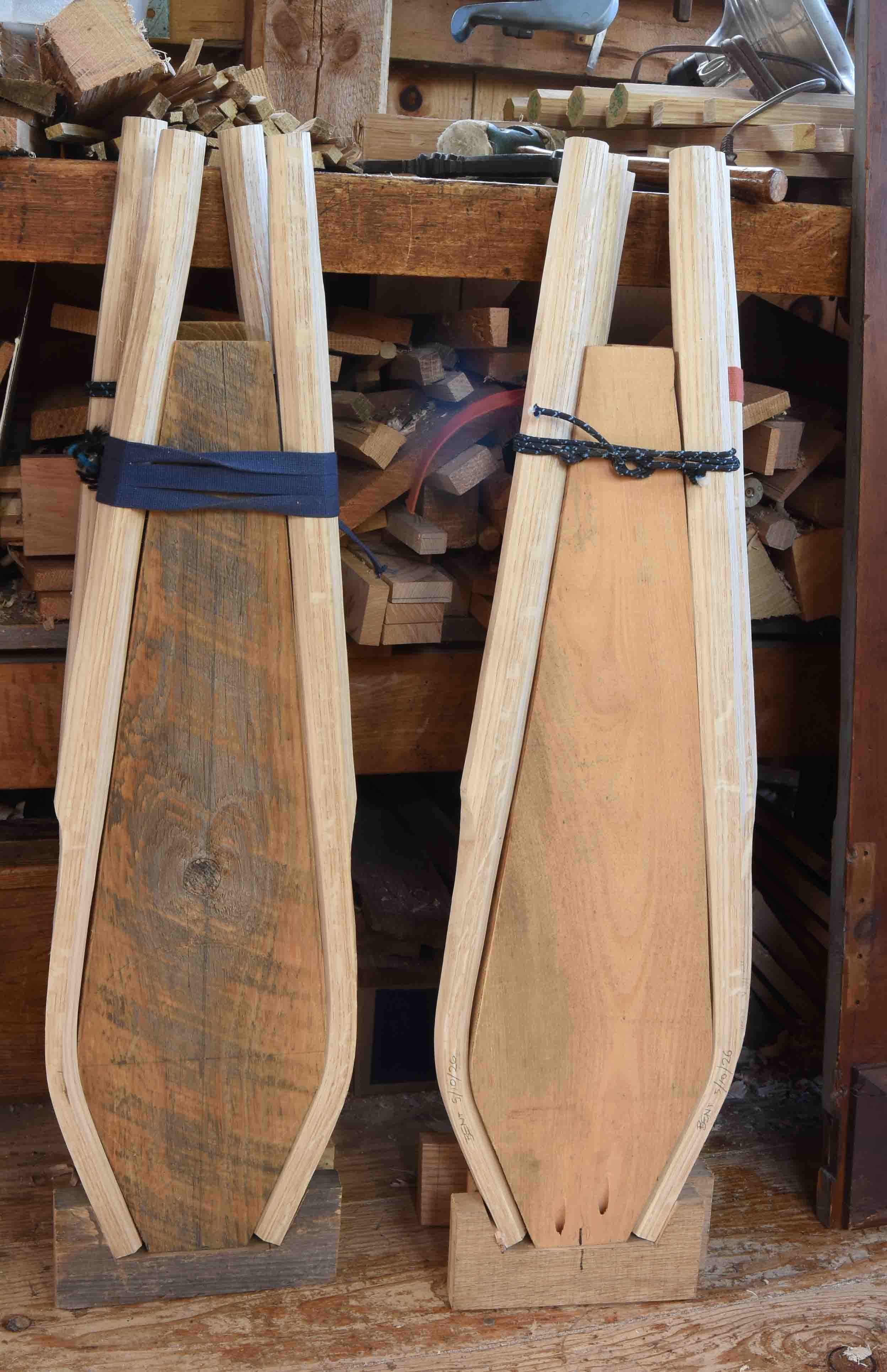
Once they’re on the form and everything is tight and snug as it should be I check the outside face of the bed to make sure there’s no cracking or splitting there. Then I write the date on both of the posts so I can keep track of them. The last thing, for white oak at least, is to apply a coat of yellow glue to the exposed feet of the posts to keep them from splitting or checking. Hopefully.
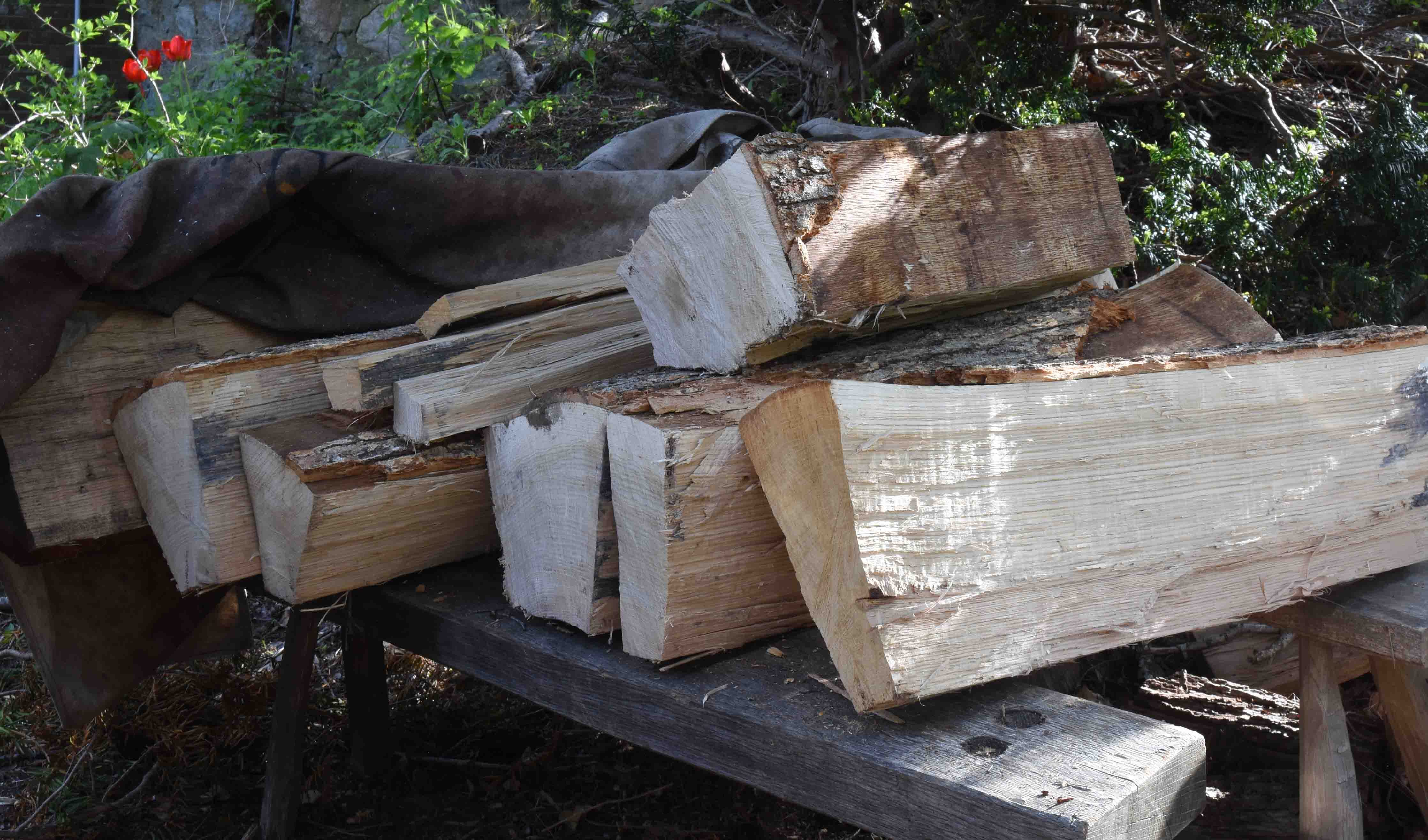
So most of my work in the coming weeks will be making pieces of things. Mostly chairs, maybe some joined stool parts while I’m at it. I end up with various short sections - and I’ll try to work those up quickly. I find white oak has a tendency to check, so the sooner those short bits get roughed out, the better. I’ve got these bolts up on two benches with a well-used - thus oily - dropcloth to cover them and keep the sun off them. That short bit on top is about 28” long - destined for front posts to the ladderback chairs. Leaves me some room at each end for trimming if need be.
All the time I was struggling with that white oak, Rick McKee was splitting his black oak - and it seemed all he had to do was laugh at it & it opened.
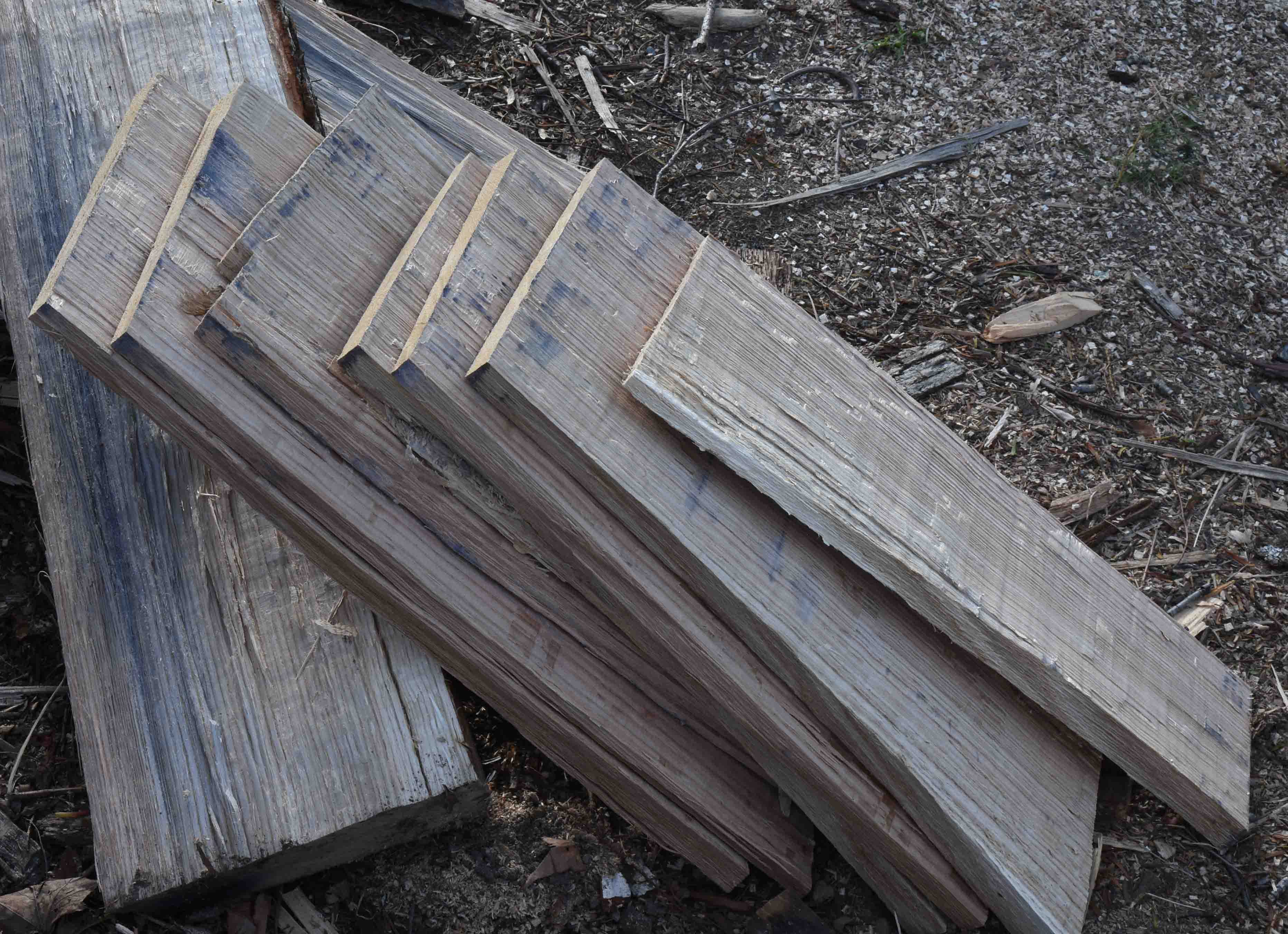
But - friend that he is, he had an off-cut about 18”-20” long that he insisted I take home. Too good to burn, perfect for panels or boxes. These splits are about 9” wide and as flat as can be. I think I’ll have him pick out my next log.
The post title grabbed me immediately, since I am prone to oak greed. And oak envy. And, when I am lucky [rarely], oak pride. Are there 7 deadly oak sins?
Who-picks-logs-Who-picks-logs-who-picks-logs-for-yooooouuuu.