
some joined stool work begun
and a video about layout & a story stick

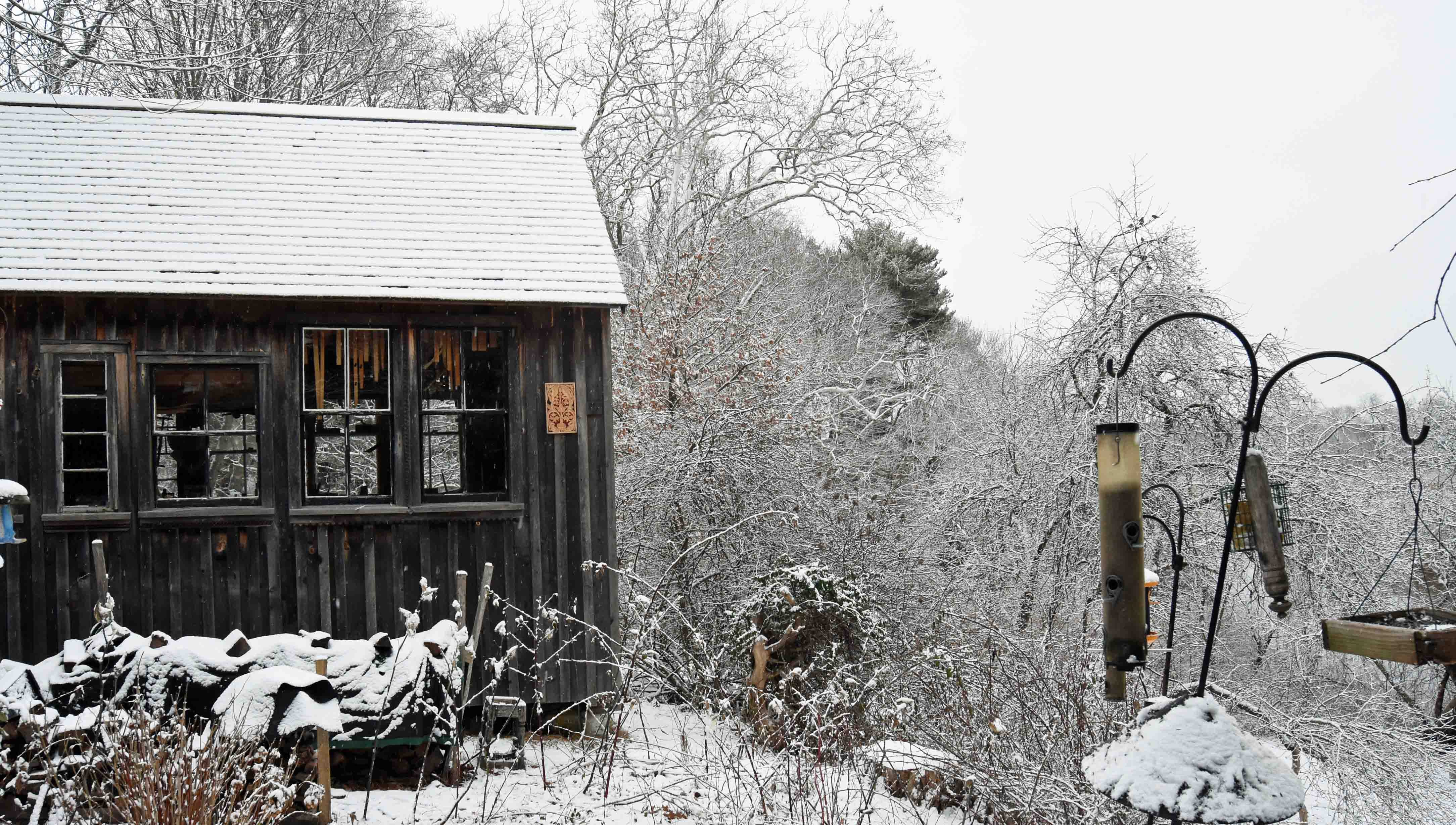
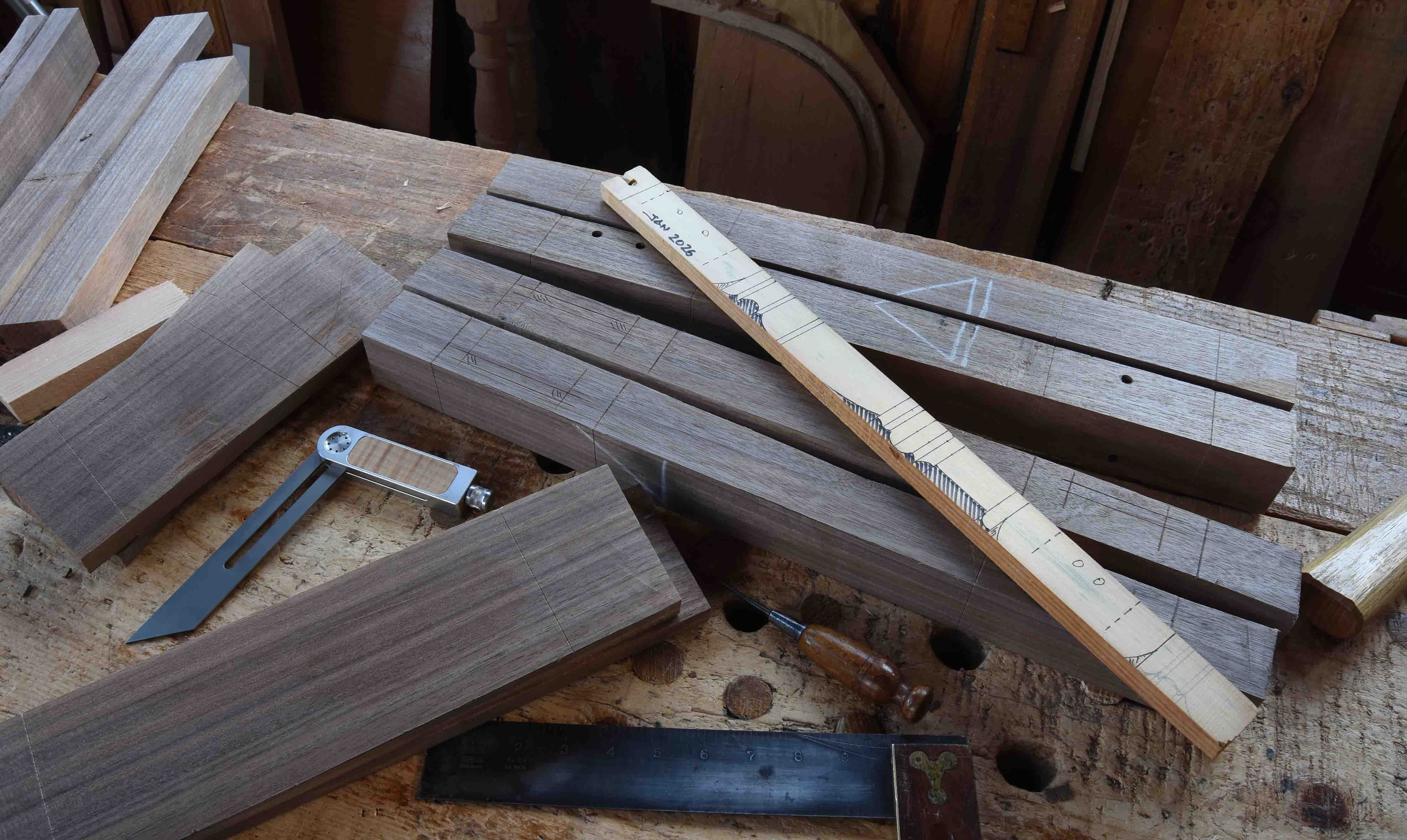
Wintry days in the shop can be among the best there are. I went out there on New Year’s Day and it was so quiet and still in the neighborhood - I couldn’t bring myself to do what I set out to do. I had planned some mortising for the first joined stool of 2026. But I didn’t want to be the one who broke the quiet of the morning. I did some more of those birch bark containers instead - that’s very quiet work. Then yesterday I started in on the joined stool.
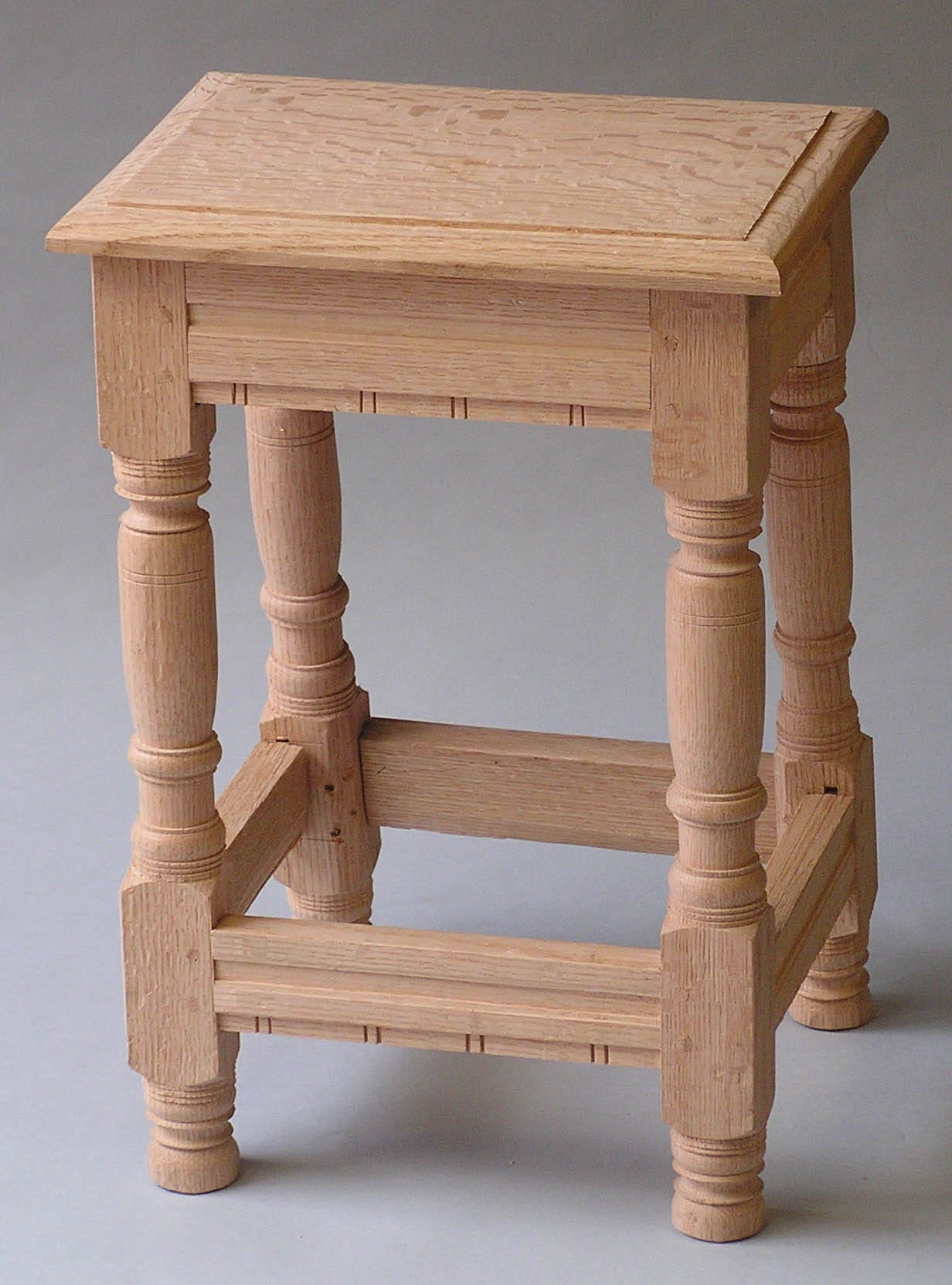
I have a couple of different approaches to a joined stool, much like my carved boxes. Some are direct copies of existing stools that I have studied in detail. Some with Jennie Alexander, some solo. Here’s one I used to make a lot - based on one made just a few miles from where I live, maybe in Marshfield, maybe Duxbury. Copied as closely as I can get.
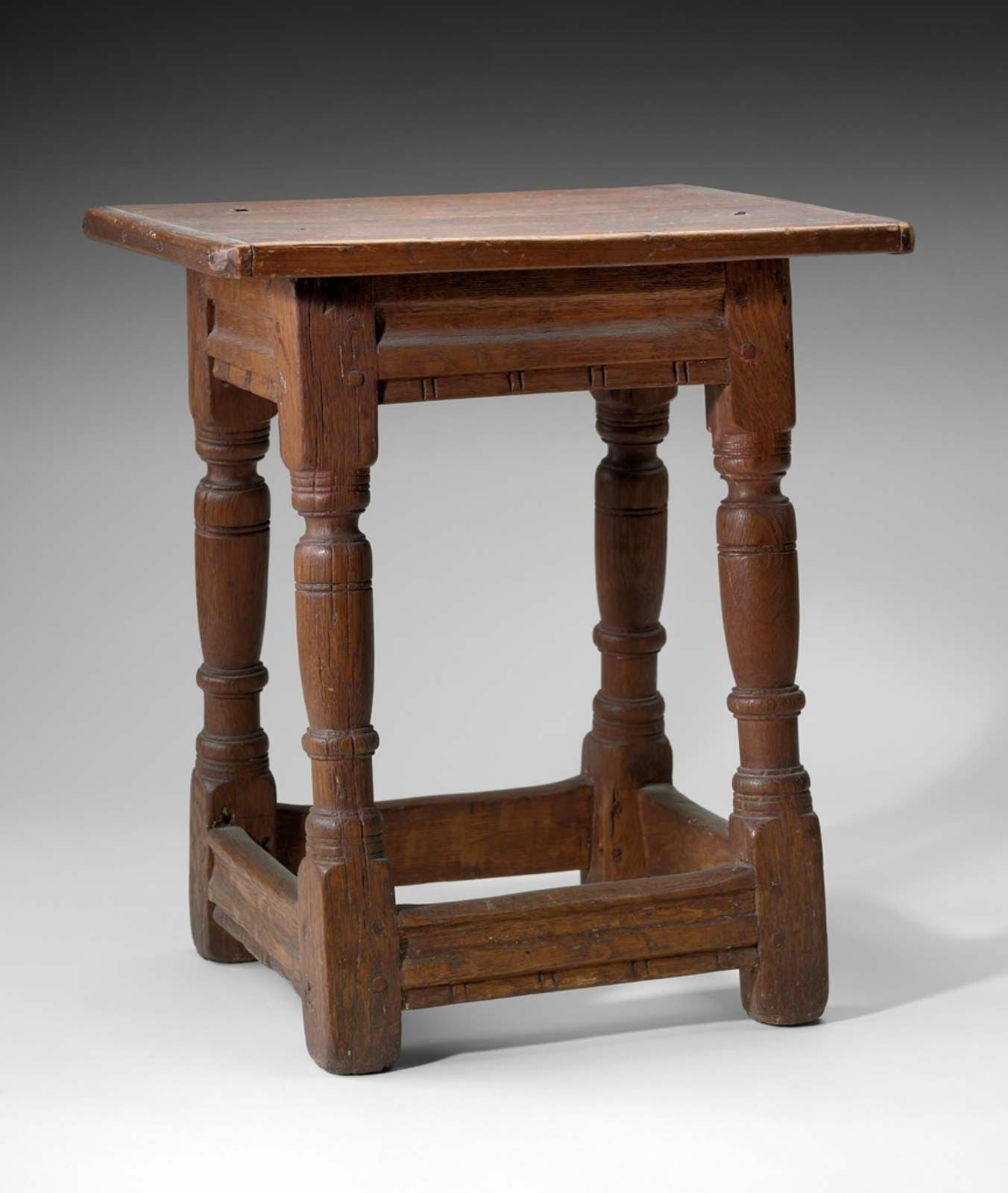
The original it was based on is at the Museum of Fine Arts in Boston - missing its feet, replaced top and stripped of its finish, resulting in a worn surface. But the details can be sussed out - the moldings through the rails, the paired chisel-cuts in a rabbet on those rails and the turning pattern. I saw remnants of feet on a related stool in a private collection.
Others, I “make up” - taking a turning detail here, a molding idea there. And add a carved apron - something we’ve never seen on New England stools, but it does show up on English ones. Another mystery as to why that might be... and here’s one I made - I was going to say “a few years ago”, but I see that it’s now 13 years ago!
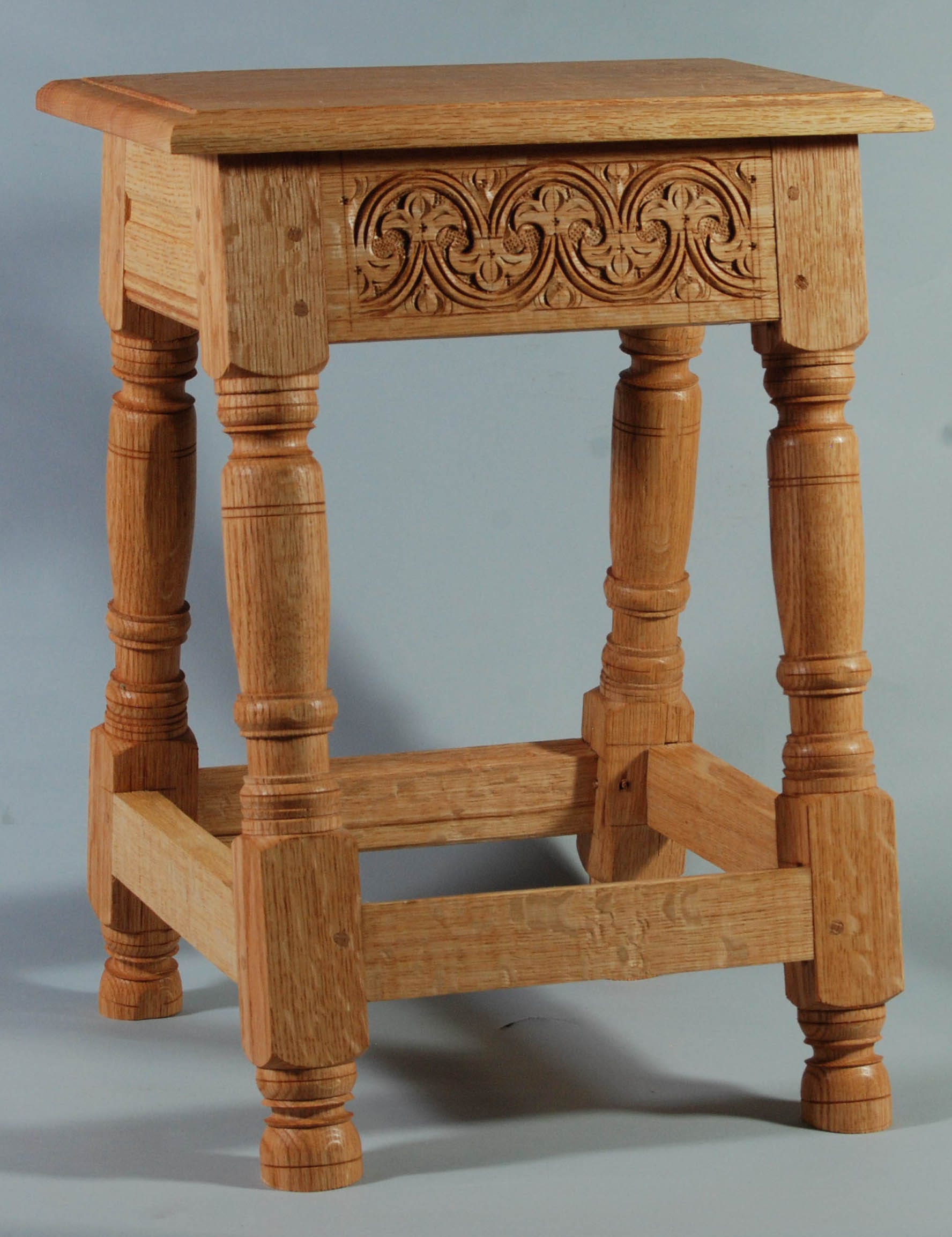
I’ve made about 60 of them over the years. Alexander drove me to it, she wanted to concentrate on stools because they required a small amount of material, small enough to get to the end but a project that captured the essence of joinery - riving, mortise & tenon work, drawboring, etc. So we filled notebooks scheming how we’d make them and how we’d teach it. Eventually that ended up in our book Make a Joint Stool from a Tree https://lostartpress.com/collections/green-woodworking/products/make-a-joint-stool-from-a-tree
One of the things we went over & over on was layout - how to designate/differentiate the stiles one from another. How to layout the joinery effectively and simply. How to transfer the layout from one piece to the next, etc. We made up marking systems, some based on evidence we saw on period work, some from JA’s grey matter. Much got tossed.
One of my favorite bits I picked up from period work is to plane off the inner corner of the squared stiles. Sometimes this chamfer is quite pronounced. It’s on that MFA stool above, but I don’t have photos of it anymore. You can see a hint of it on this table Alexander & I photographed at the Smithsonian in the early 1990s. Much worn now - this is the bottom of the stile - but that inner corner was deliberately planed away. Note too that the inside face on our right is less than 90° from the outside face on the bottom of the photo. That showed me what you can get away with!
