Recent ladderback chairs
through mortises for slats? Why?

The other day I wrote about weaving the bark seats on some ladderback chairs and alluded to a story about the slat-mortises. This post will take care of that subject. but first, my last shopping detour for the year. A link to Maureen & Rose’s work - updated again https://www.etsy.com/shop/MaureensFiberArts
and at my end of things - My work lately has been to fulfill orders from a waiting list, but I do have two carved panels left. If you want either of the panels, send an email. Paypal is probably the way to go if timing is important. PeterFollansbee7@gmail.com
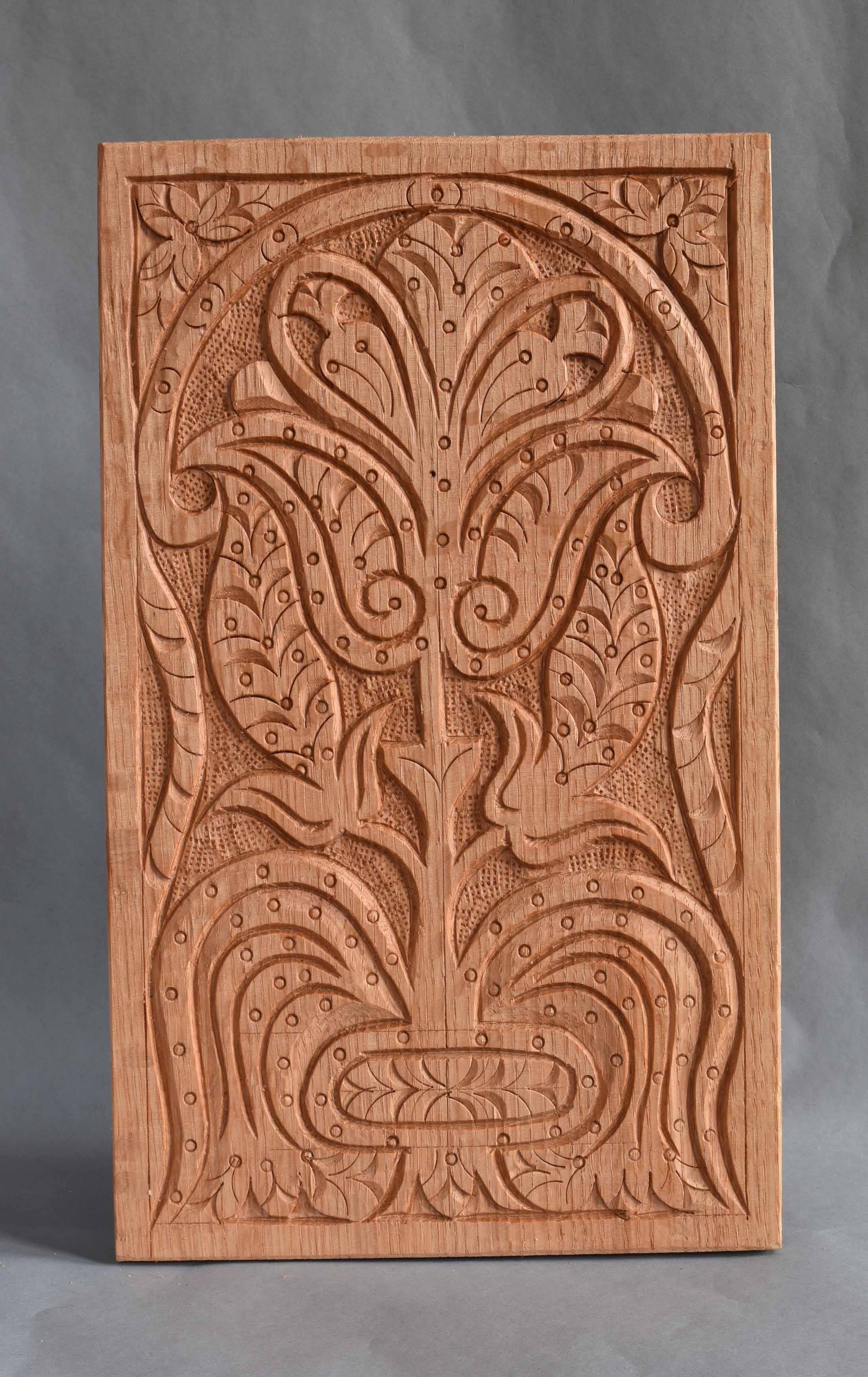
Ipswich panel
9” x 15”
red oak
Just what it says, a carved panel based on the work of Thomas Dennis from Ipswich, Massachusetts, c. 1660-1700. Linseed oil finish.
$550 includes shipping in US. Check or paypal (w/added fee - $570)
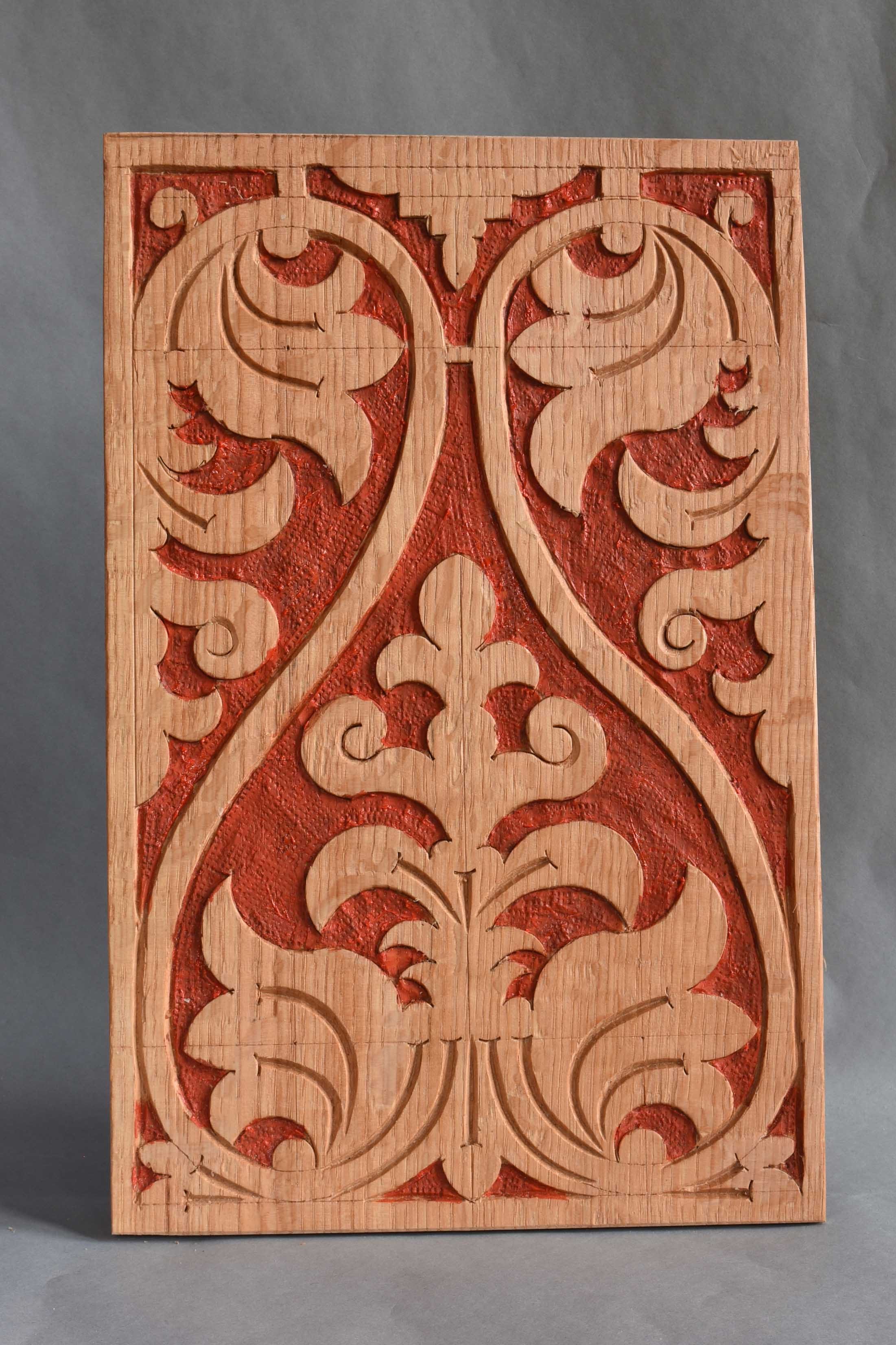
Carved & painted Dedham panel -
9 1/4” x 14 1/2”
oak, linseed oil & paint
Vermillion oil paint in the background. Based on works from Dedham & Medfield, Massachusetts, 1650-1680
$550 includes shipping in US. Check or paypal (w/added fee - $570)
…………………….
Enough of that - onto those chairs. The top slats are through-mortised/tenoned into the posts. Bottom slats are in blind mortises. And as I was doing this work, I was thinking of someone coming long after me, seeing these chairs & trying to understand why this mixture of methods.
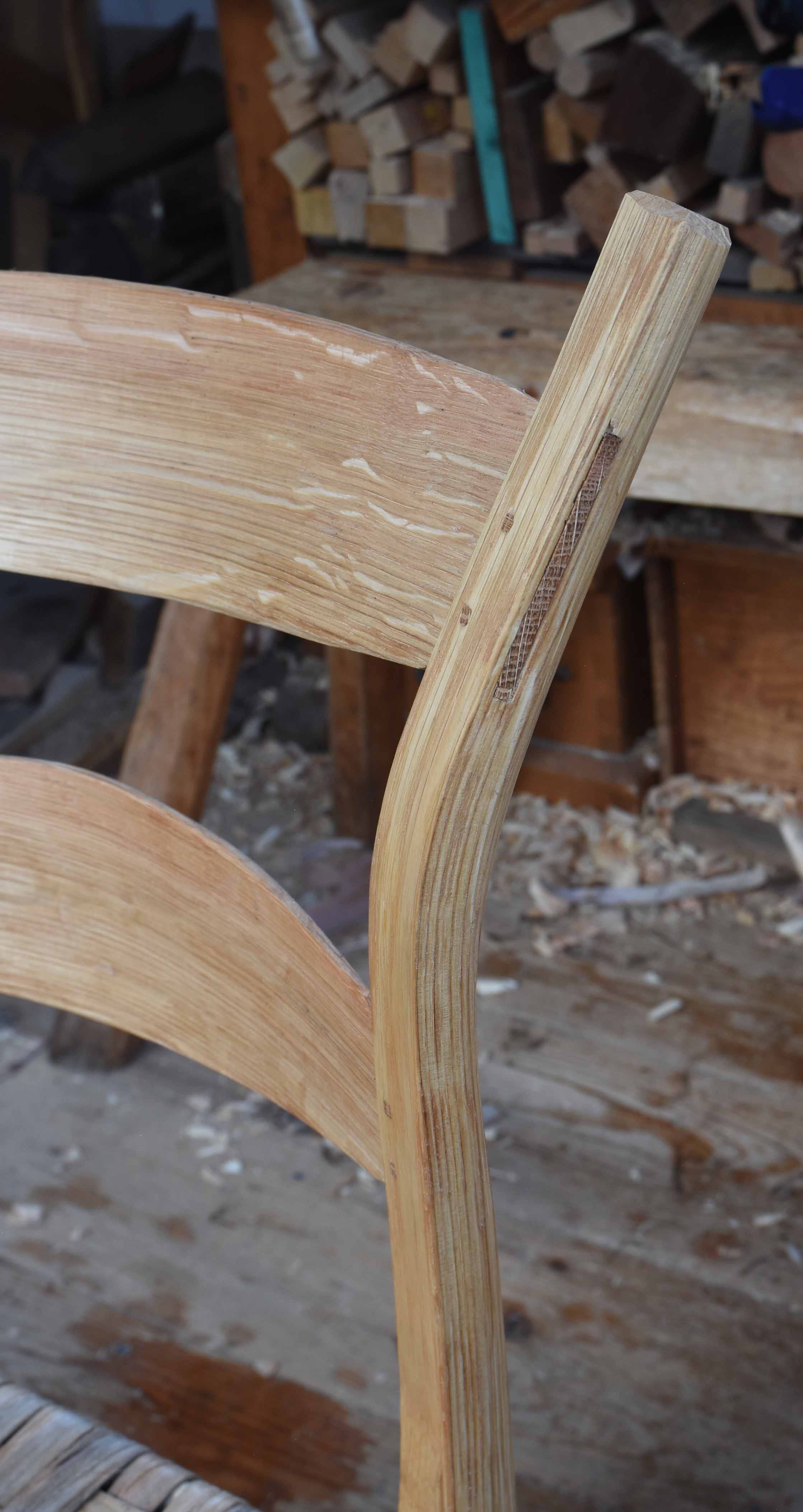
First thing I think of - the two slats are bent different amounts and the top slat is longer than the bottom slat. I feel like there’s less pressure on the lower slat, maybe because the posts are closer together down there and there can’t be as much flex to it. Maybe. Because those posts flare out at the top there can be a little “give” when you lean back against that top slat. I’ve never had a problem (that anyone has told me about…) of that top slat breaking.
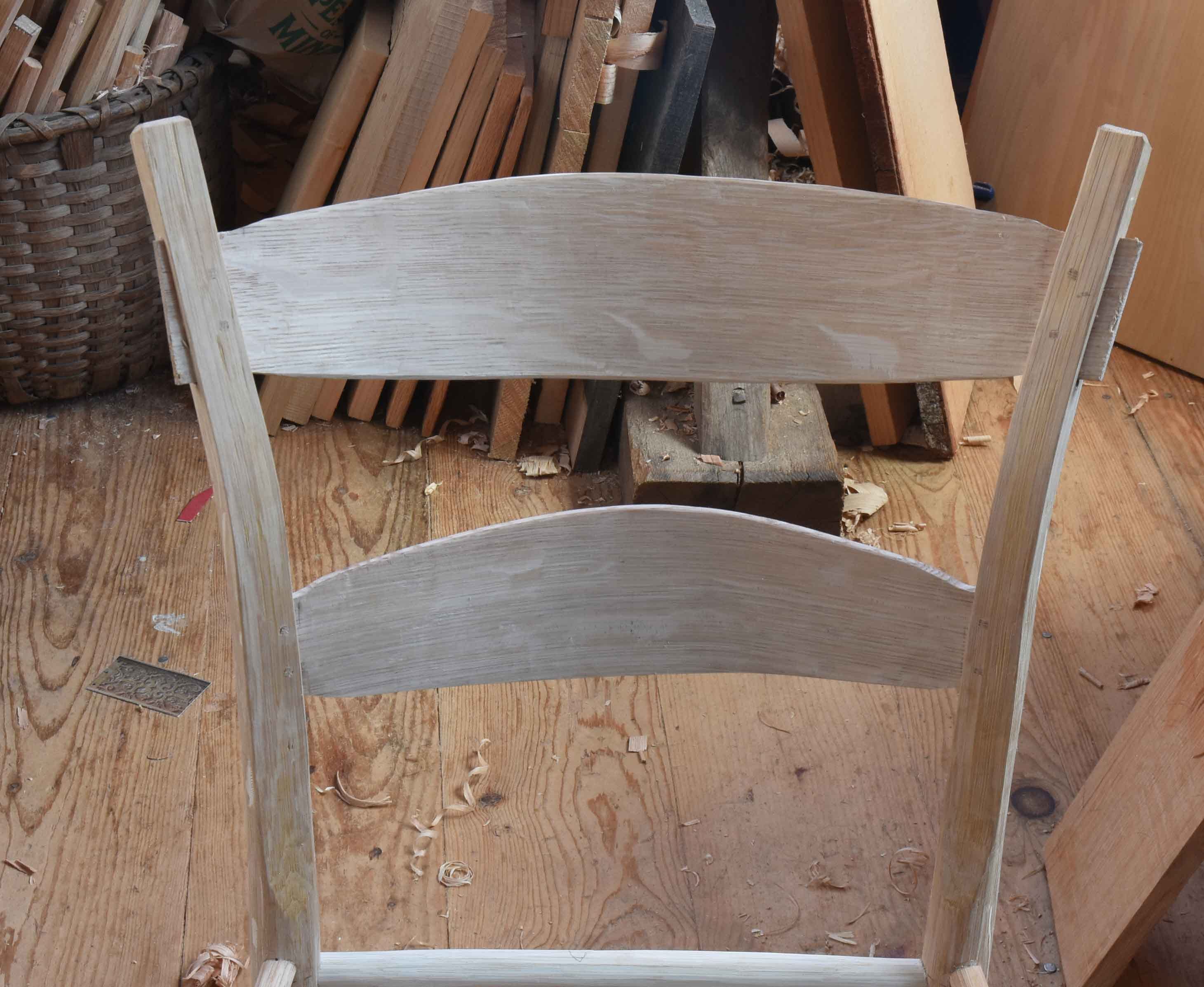
Then comes pegging those slat tenons into the posts. Which brings us to “relish” - a term I learned from timber-framers for the bit of wood in the tenon beyond the pin/peg that secures the tenon. I don’t know why it’s relish, but it is. [I looked it up in Jack Sobon & Roger Schroeder’s book Timber Frame Construction (Storey Publishing, 1984) where the authors claim it comes from the French word “relais” which they interpret as “remainder of what is left behind…” -well, I’m not going to get into it.)
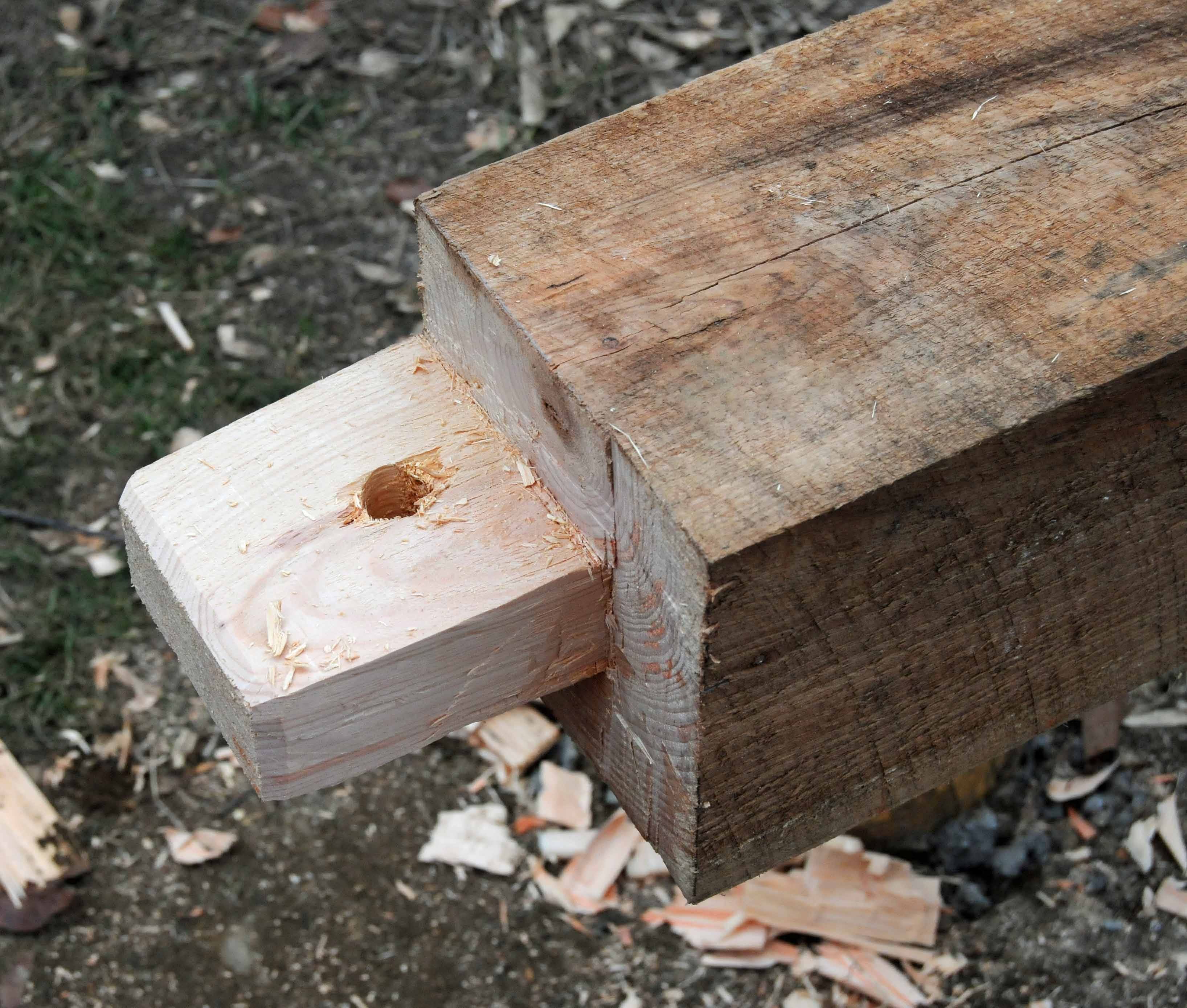
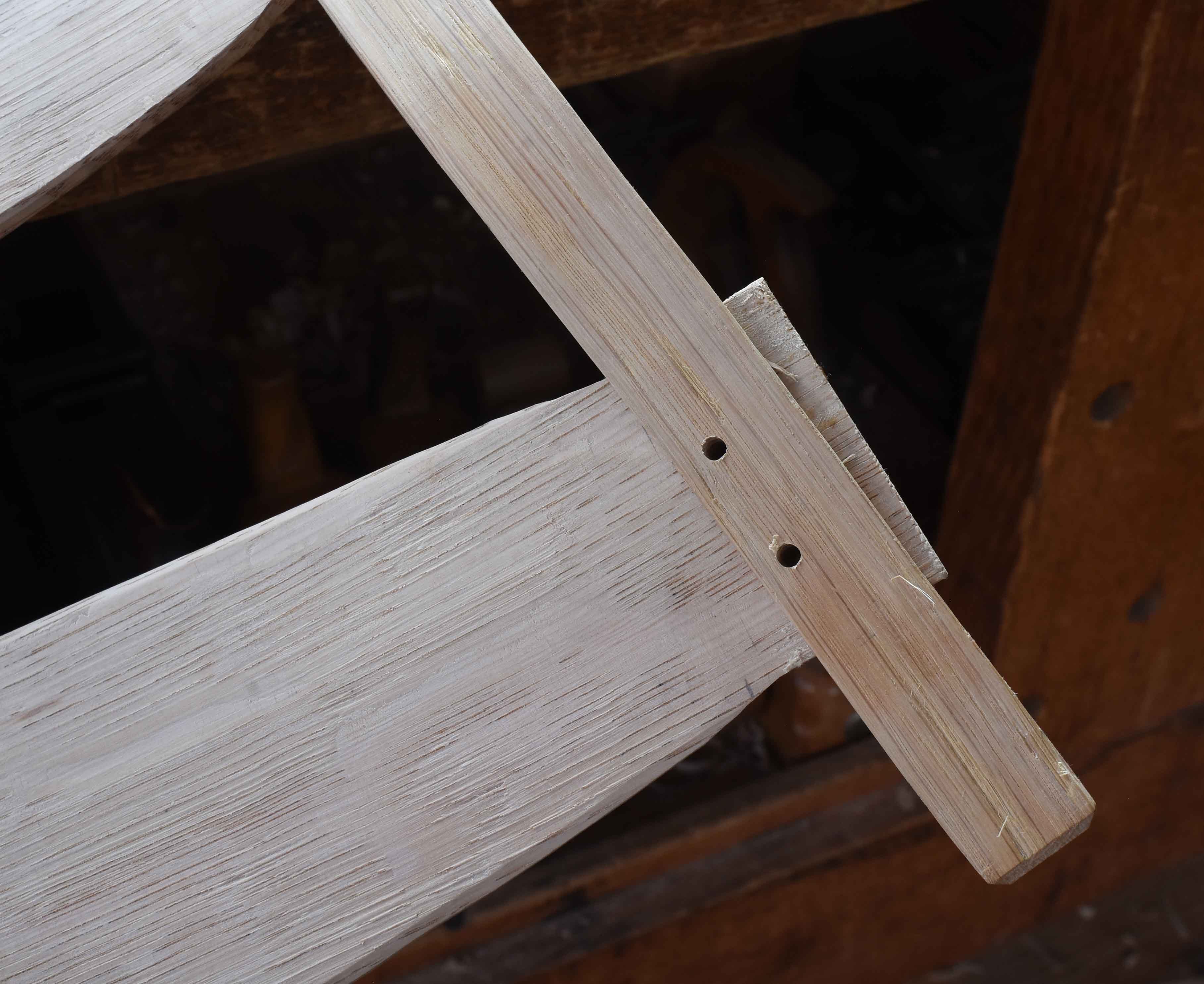
If there’s too little relish- the wood can split out beyond the peg. Ruins any connection that peg is meant to create. So with a “blind” mortise in that post, you lessen the length of the tenon, which reduces the amount of relish. And - the post is narrower there than down below at the first slat, maybe 1” wide at the bottom slat and 7/8” at the top. So a blind mortise there might be only 3/4” deep. That pushes the pins as close to the inside edge of the post as you can get. You can’t go all the way against that inside edge because the post is rounded out back - you need some thickness to the post for that pin. So much going on there! This shot (different chair) gives you an idea of where I put those pins.
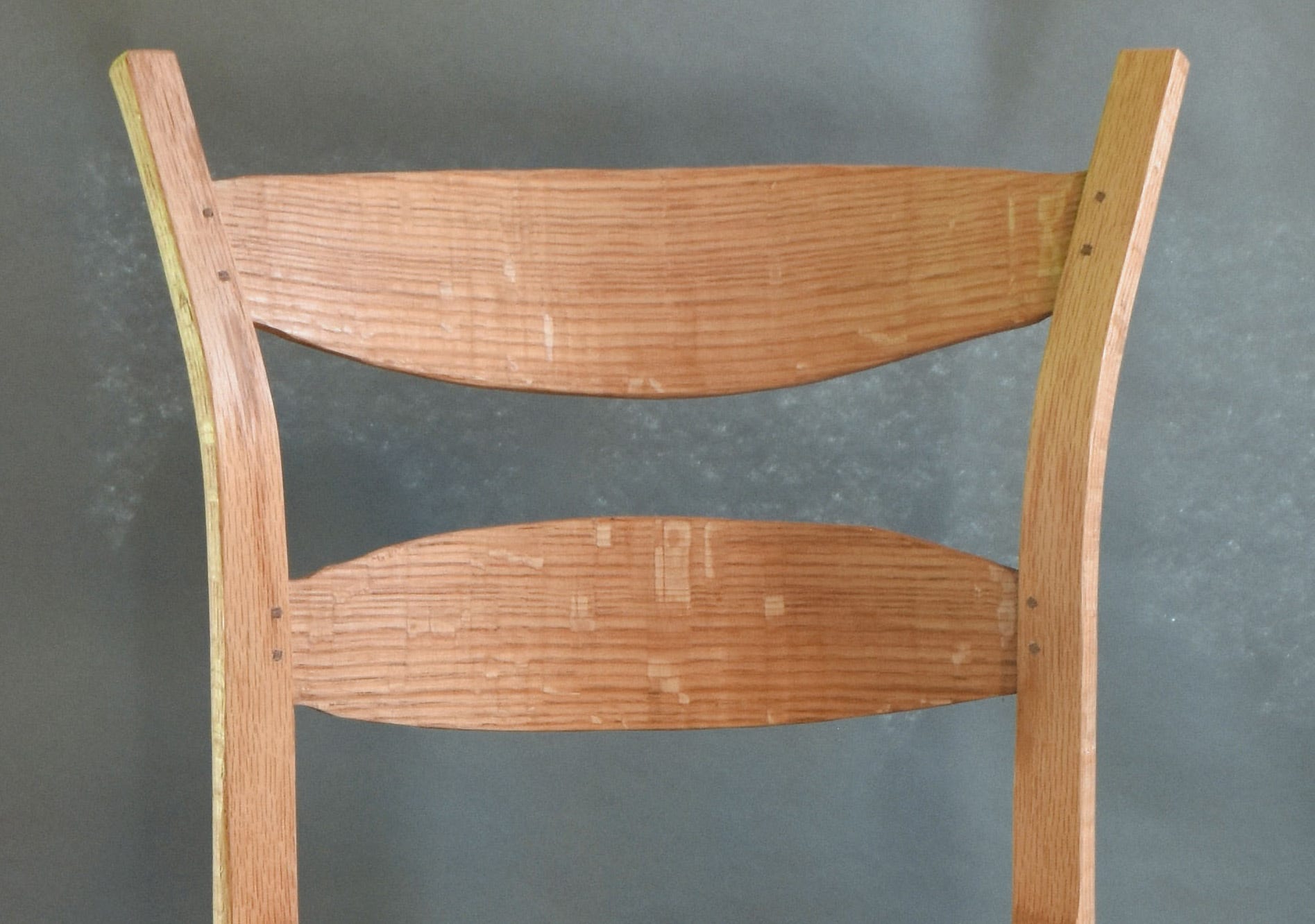
So you could argue that because that top slat has a broader reach than the lower slat, it’s more susceptible to flexing and can therefore benefit from a longer tenon/relish to keep it in place.