Paint
just a sampling of some of mine, some oldies too

I got back in the shop part-time for the past couple days after a week of being away from it. Slow start, sorting out the riven stock that’s been piling up and trying to figure out what’s next. I have a couple of ladderback chairs to finish up and some carved boxes to start...
Today after shaving some chair stock and sorting various parts I had a little bit of time before I had to go out - so I painted this carved panel.
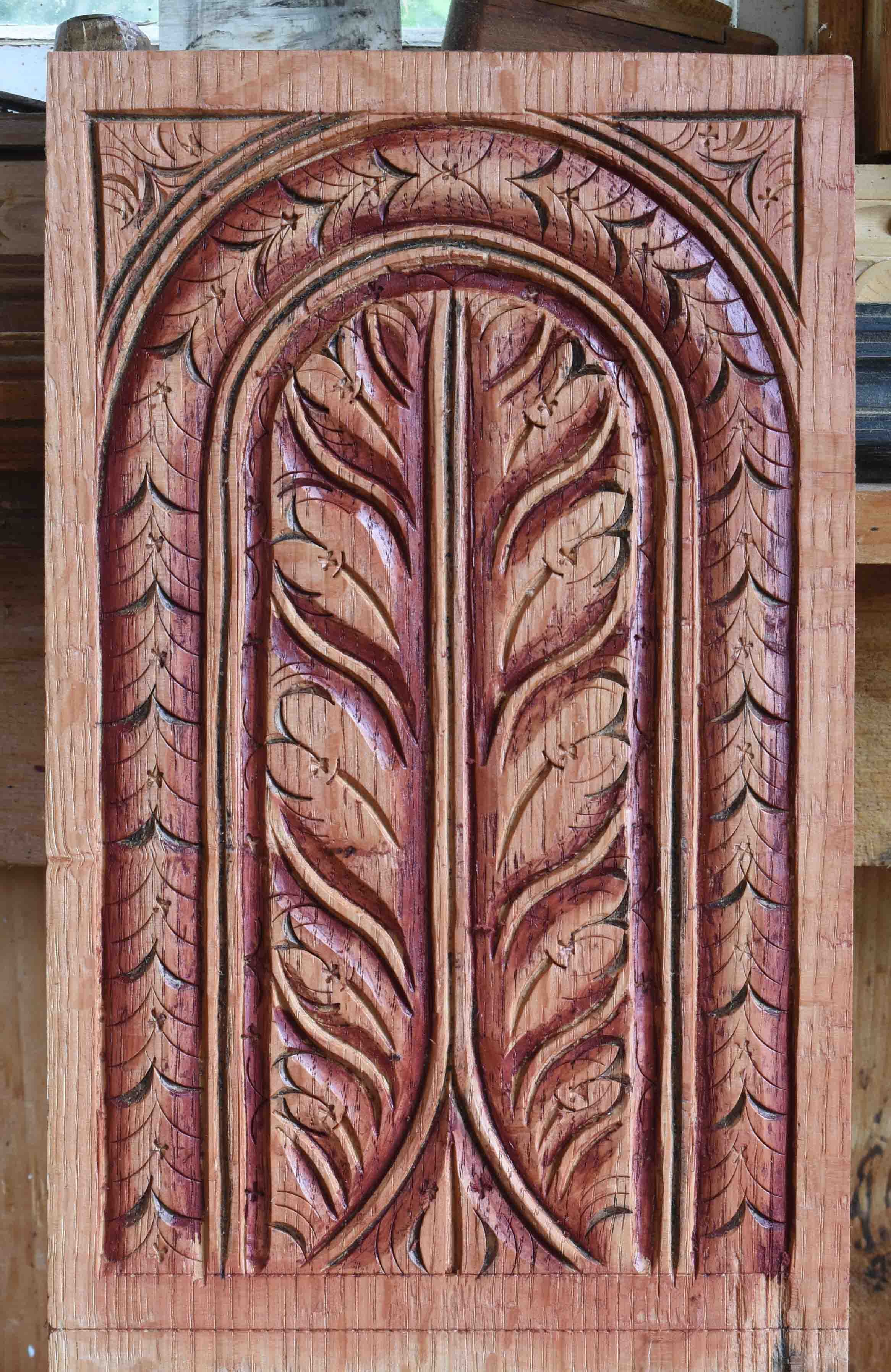
That had been my intention all along - reaching back to when I carved the panel a month ago - just hadn’t got to it. And today I did it as a spur-of-the-moment thing, so I shot no photos. But I can tell you what happened and more about painted work in 17th century joinery.
My goal was to create an effect like I got on this - my 2nd-ever joined chest, back about 1991 or ‘92.
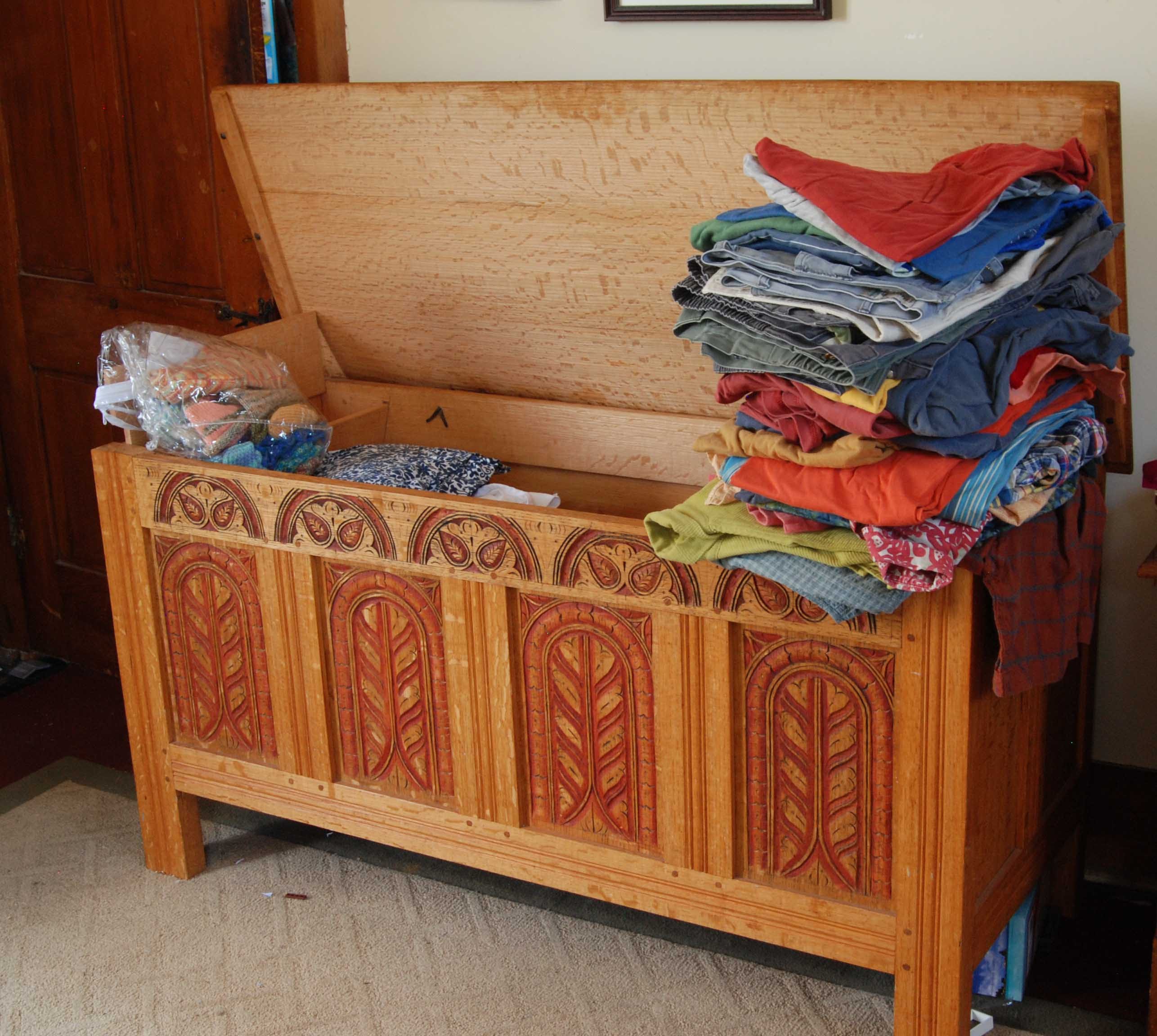
When I carved the panel, I oiled it with a thinned coat of linseed oil. These days I use good quality refined linseed oil and citrus thinner. I probably wiped two coats on that panel, then set it aside to dry.
Once it was dry enough, the next step was to mix some thin black paint - that same oil and thinner mixture with some carbon pigment dissolved in it. I made it very thin, maybe too much so. Then with a very fine brush wiped the black paint into chopped & incised areas - those inverted Vs flowing around the arch for example. Let that dry - a couple days would be enough. As it happened I let the panel sit around quite a while.
Today I mixed some iron oxide red into the oil/thinner combo. Then with a narrow flat brush wiped a swath along both edges of the arch, both sides (above & below) each S-curve cut in the inner part of the panel. The narrow gouged-out area that follows along inside the arch and so on. Once that paint was laid down, then I dipped the tip of a small rag in the oil & wiped it along all those places I applied the paint. That gave the panel that effect of being sort of blended - in the end it creates a VERY thin wash over the whole surface with stronger applications highlighting the carving.
I can’t say for certain these panels were painted this way - I have seen some of them that appear to have pigment in those highlighted areas. Here’s a detail of one - refinished, but some darkness/color in those areas:
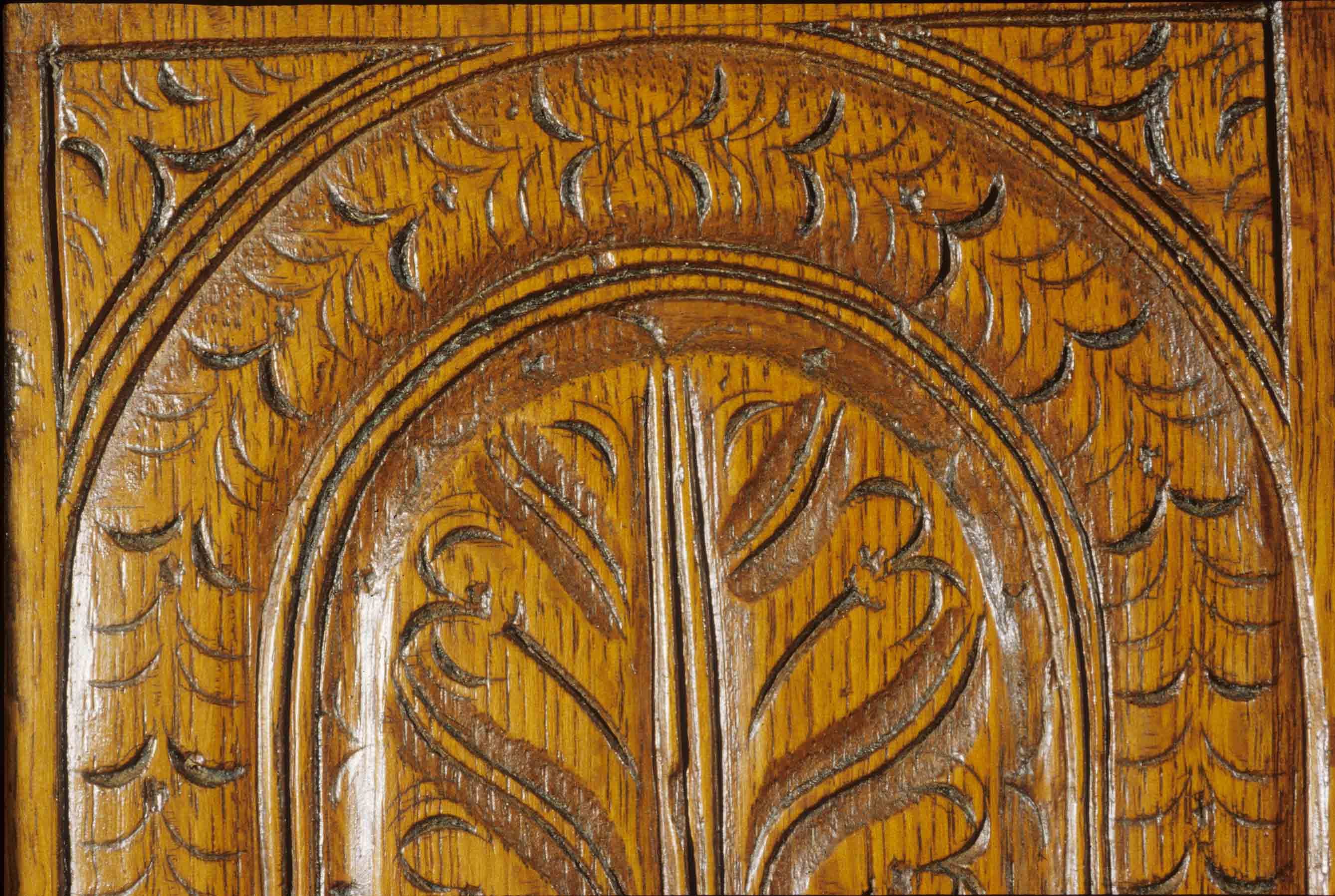
Maybe the whole panel was painted and a refinishing/stripping removed the surface paint and left it in those recessed areas. Without a conservator doing a paint/finish analysis we won’t know. There aren’t many objects from this particular group that would be a good candidate for that analysis even if there was funding to do it. So all is conjecture. But I like the look of this - even if it’s not period-correct.
Paint was often used to highlight/accent carved work - it’s just that there’s not a lot of surviving examples. Usually it’s the background that gets colored - we’re not sure then what the foreground gets for a finish. The box below, from Devon, has remnants of original paint in background - one of those colors looks like a bright red now. That bright color is perhaps red lead. Perhaps is the key word here. I’ll stress again, without analysis, all is speculation. Informed speculation, but not proof.
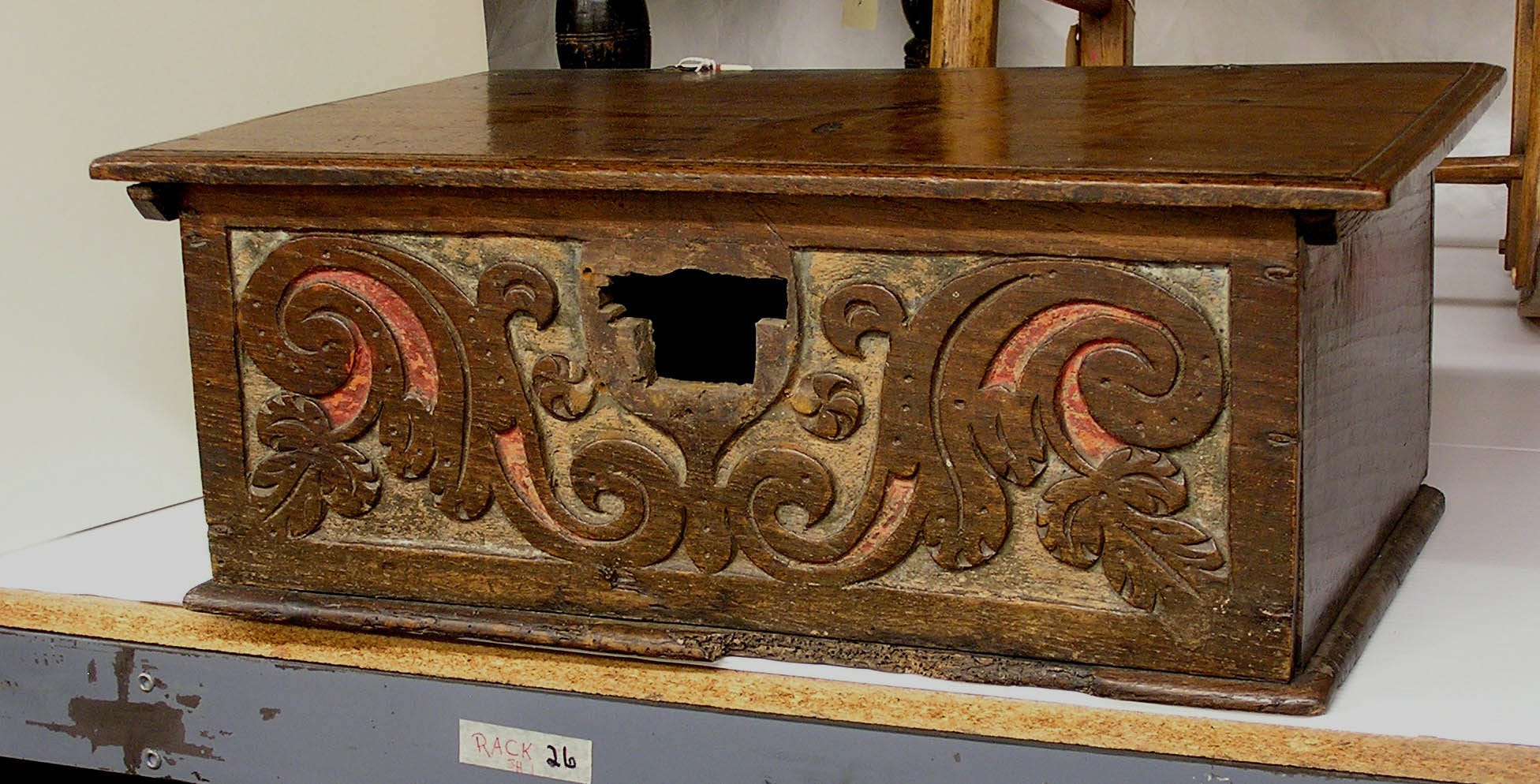
Here’s a short snippet about red lead - note the part about it being stable in oil, but darkens when mixed in water https://en.wikipedia.org/wiki/Minium_(pigment)
Years ago a collector we know bought a carved chest that was over-painted in the late 19th century - solid black. When that paint was removed the color looked like this:
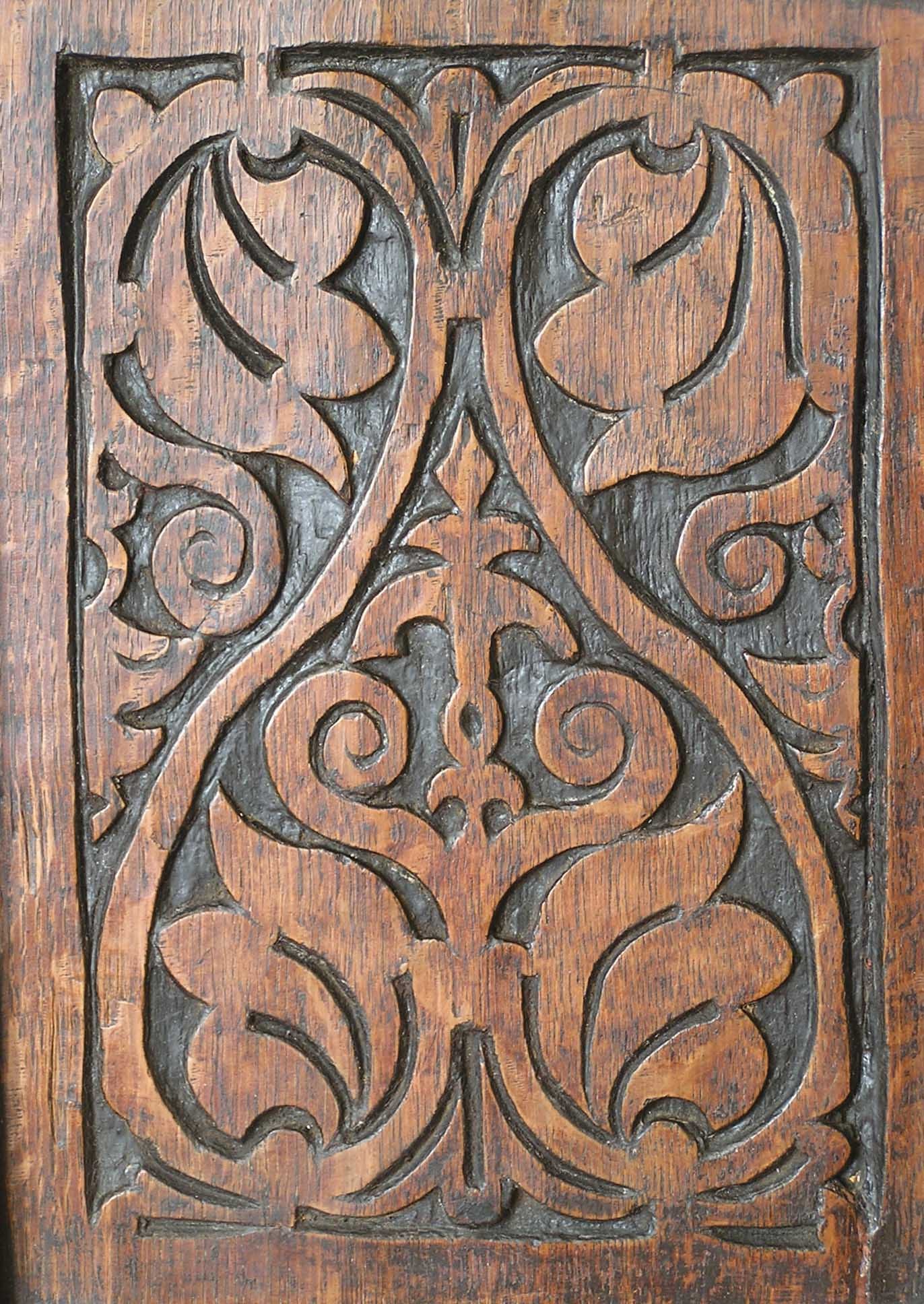
the conservator who worked on this reported that the background was carbon black - but the foreground was colored too. With a dye made from either logwood or Brazilwood. Bright red again. Now muted to this brown color. Brazilwood is more likely to make a red color - https://cameo.mfa.org/wiki/Brazilwood_dye
I’ve never fooled around with dyes - usually they’re worked on cloth, I don’t see much mention of them applied to wood.
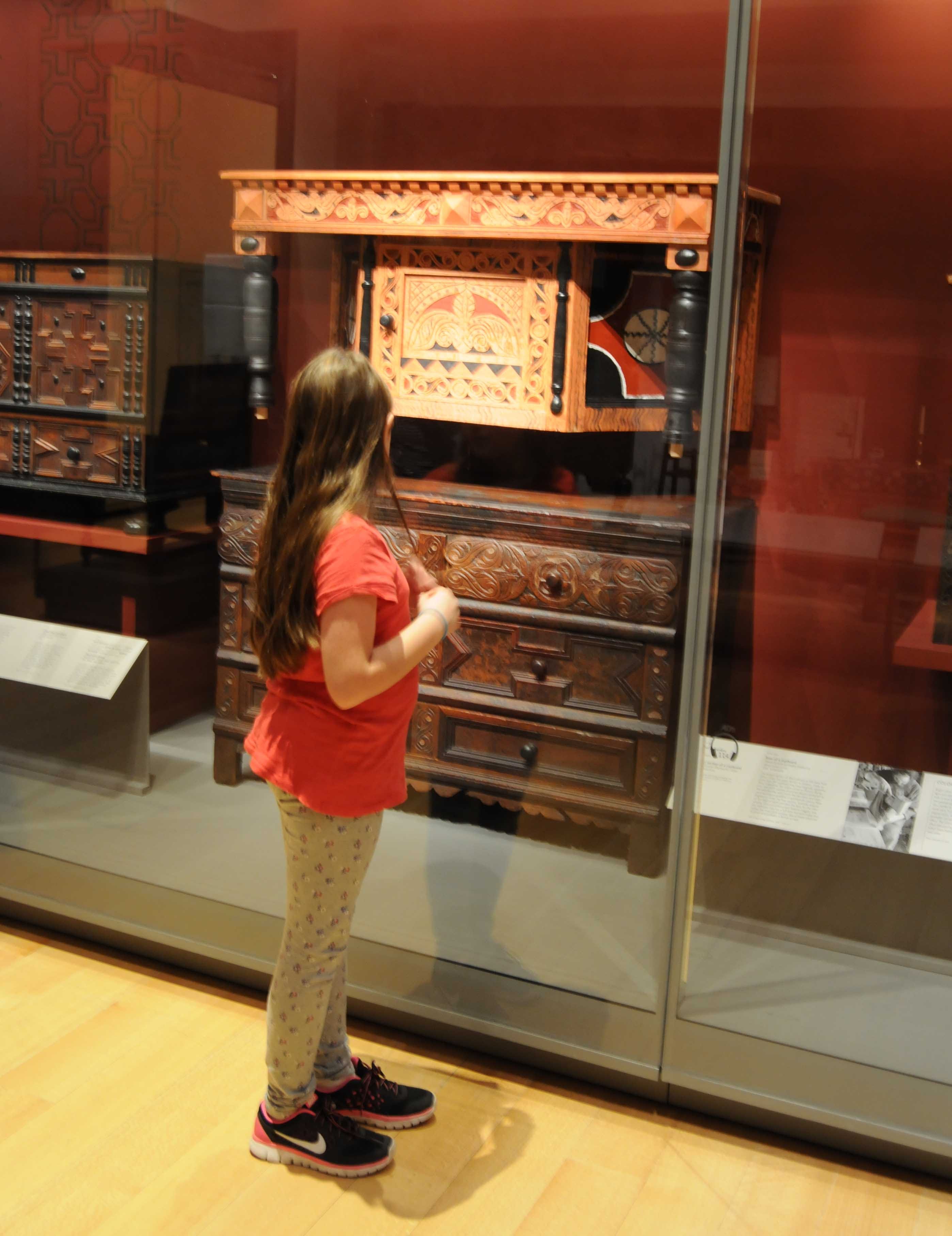
Many years ago I worked on a project for the Museum of Fine Arts in Boston to create a plausible replacement for a missing upper case to a cupboard. This was the result - displayed hanging above the original lower case: