
Mostly about the next dressing box

I’ve mostly had half-days (or less) in the shop lately. I wish it was because spring migration is in full-swing & I’m too busy birding. It’s been a slow start, but hopefully picking up in the next couple of days. This male orchard oriole (Icterus spurius) was a nice surprise, usually I can never seem to get close to them. This one came right up to the shop.
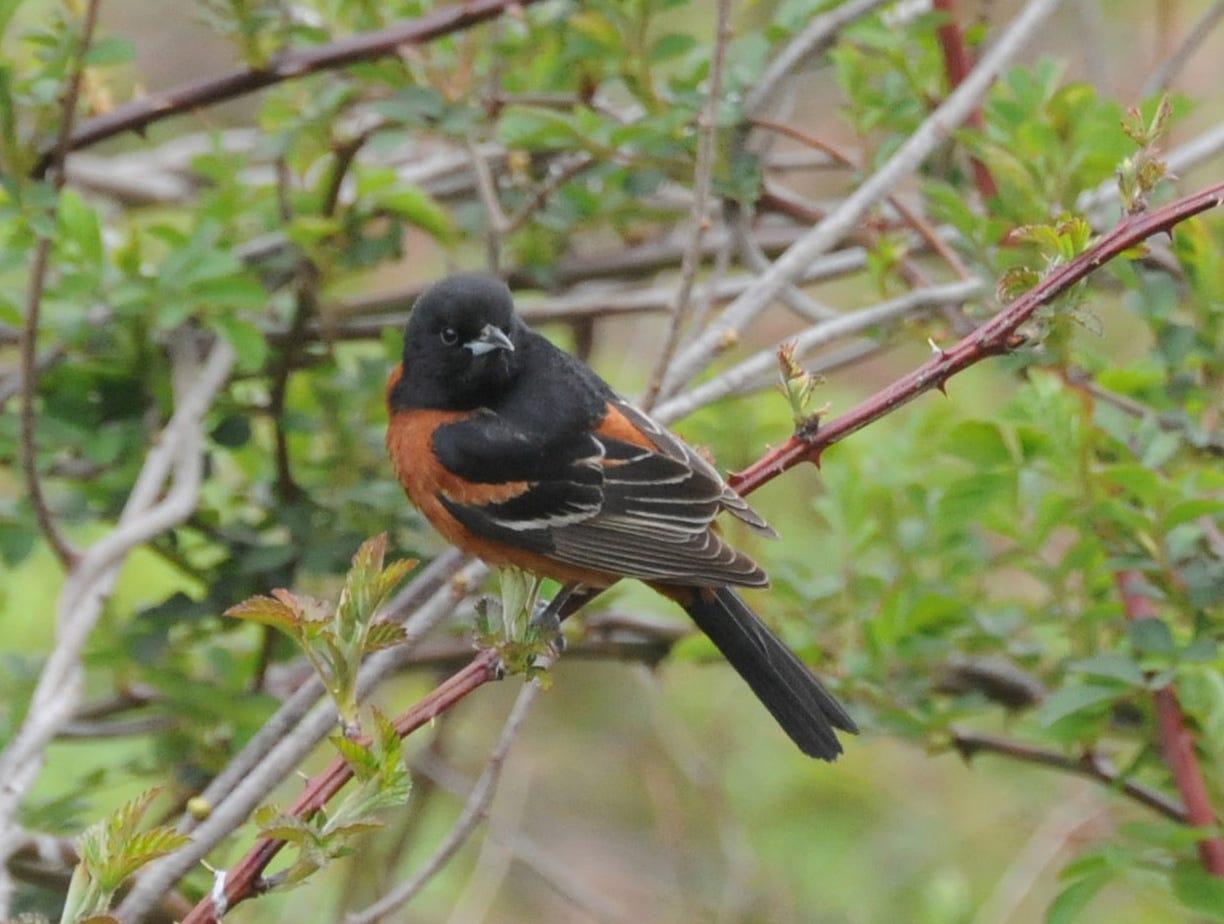
His cousin, the Baltimore oriole (Icterus galbula) isn’t as skittish. Show off.

I did finish the walnut box with the carved lid. This is one of the “all the bells & whistles” series of boxes. Mitered dovetails, carved lid, base molding - and in this case even carved till parts. The capper - literally - is the applied turned ornament on the lid.
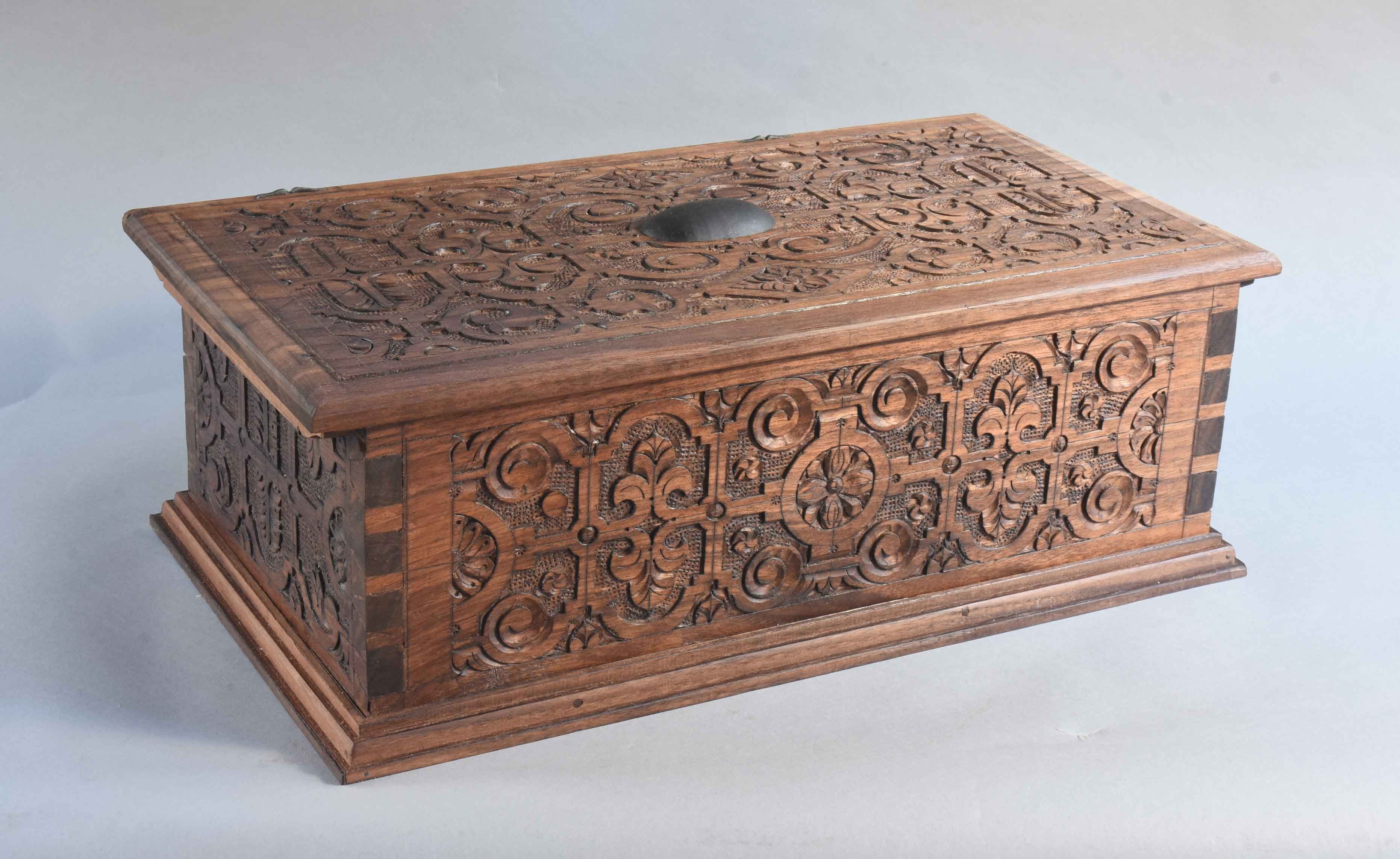
I wish I could say that was my original intention all along, but that’s not the case. When I designed the lid carving, I left a broad oval as the central element. And figured I’d come up with what to carve there when the time came. Well, what matters is that I came up with this idea - it’s not totally left-field, ornaments like that show up on some of that Devon work. This box will be for sale - I’m going to make a page on the website about it. I do still have the recent oak & pine carved box if anyone’s needing one. https://www.peterfollansbee-joiner.com/loftsale2026
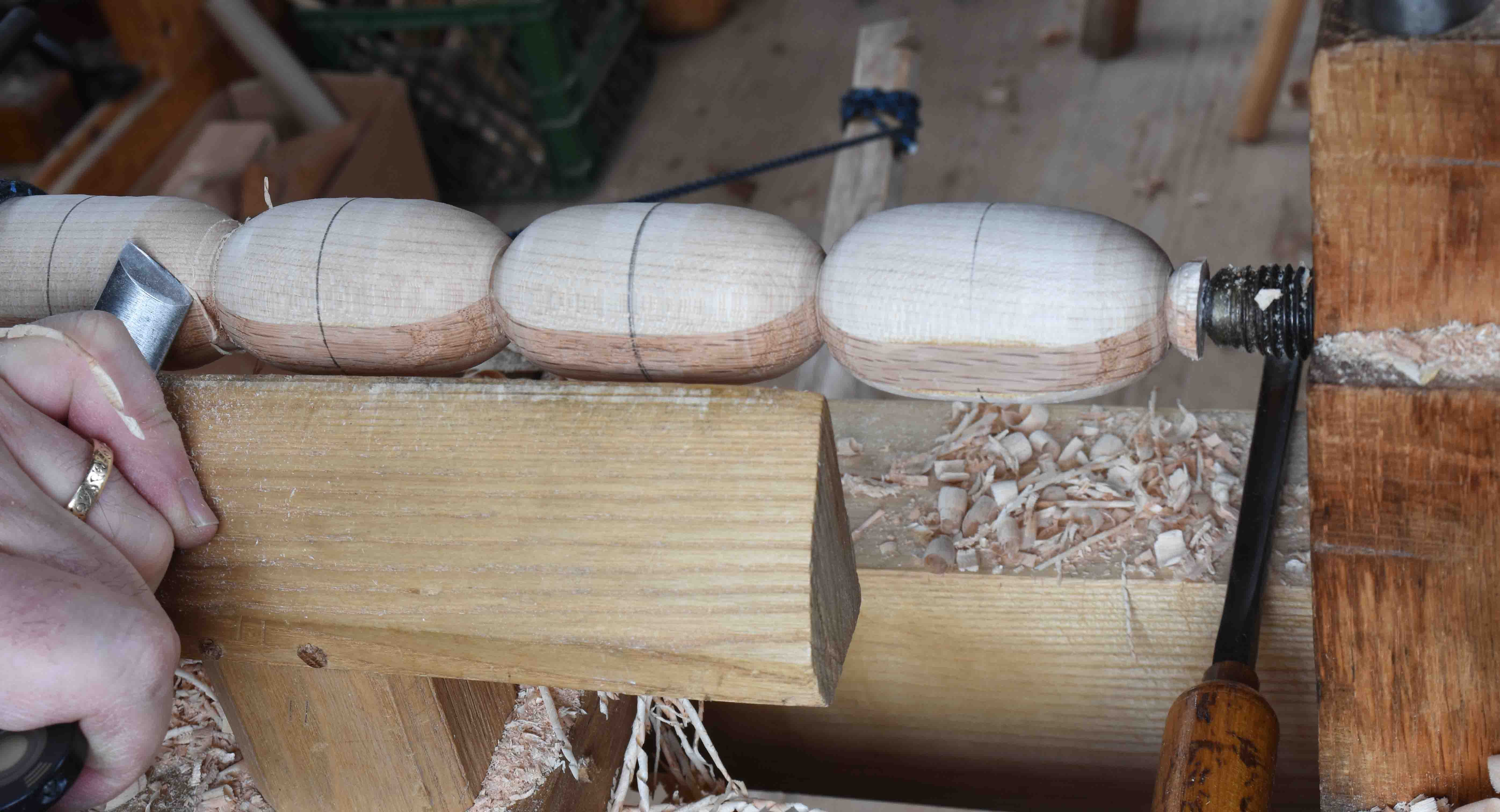
When I decided a turned oval boss was what I needed, I looked in my stash of extras - but those were too flat. I wanted something significant - now no one can pile stuff on top of this box. You can’t make just one of those “bosses” - the batch I turned got me 6 of them. (this photo is from an earlier bunch…)
I’ll use some on the dressing box I have underway. I got the stiles cut away for that & then began working on what I call the “guts” - the dividers inside the box compartment. And I am reminded just how perilous it is to cut all the notches and grooves to form those divisions.
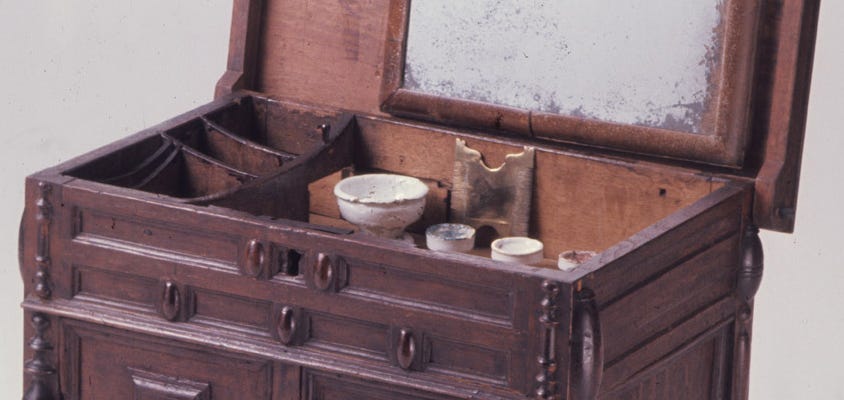
I’ll back up to remind some/inform others - there’s only 2 of these creatures that I know about. And I’ve only seen one of those in person. Bob Trent & Josh Lane gave me photos & measurements of the 1694 one at Winterthur and I studied the one at Boston’s MFA with some of the staff there. The insides of Winterthur’s are almost complete - those at the MFA are replaced. I didn’t measure the divisions - just estimated them from the measurements I do know & the photos, etc. Here’s a shot i cropped of Winterthur’s - their photo.
The first piece I fit in was the the long strip that reaches from the front to the back of the box - almost all the others intersect with this one. Then came the two pieces that reach between that divider and the side rail.
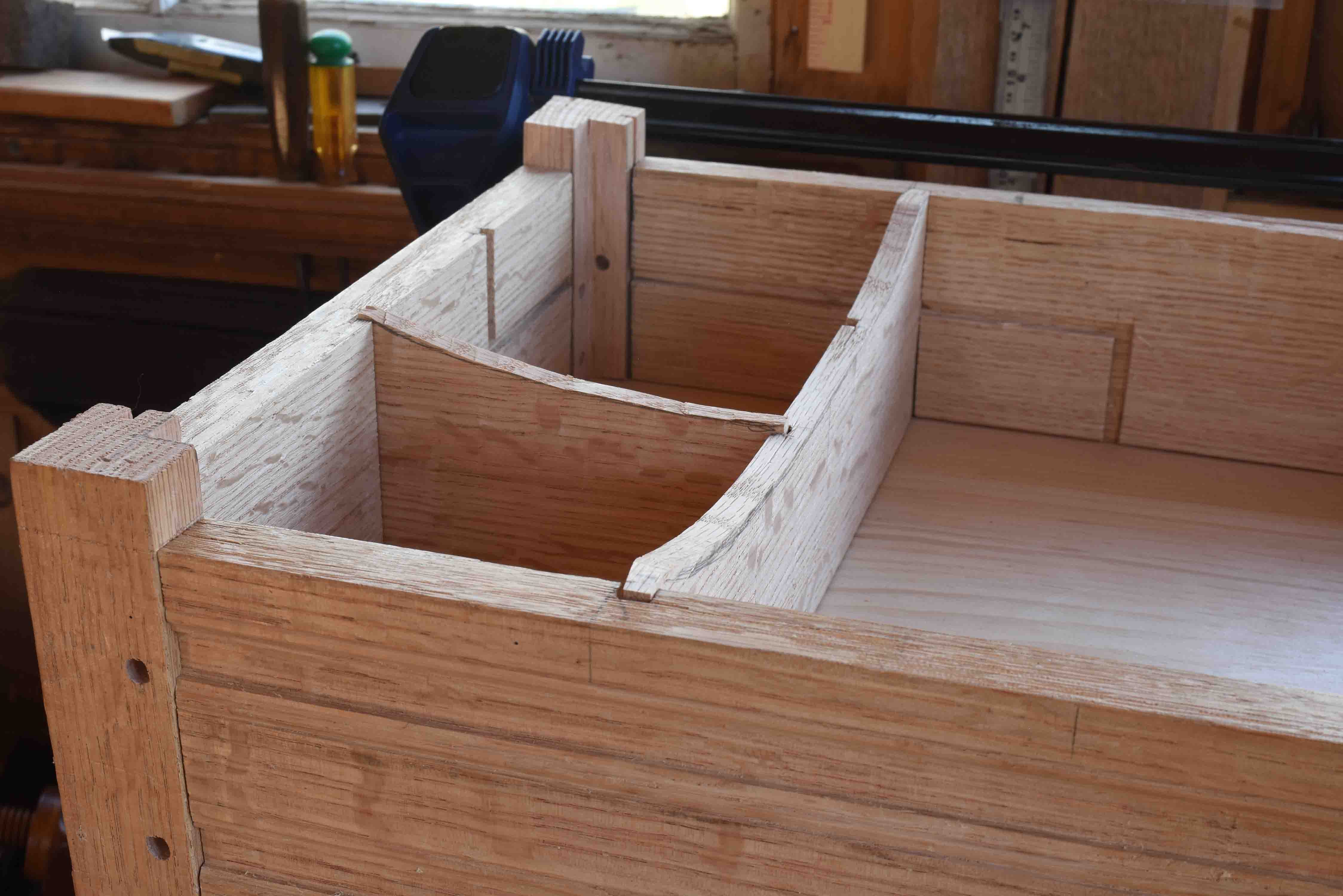
For the curved top edges of those pieces, there’s no need to do any actual layout. That short one that fits between the side rail & the dividers for example - I just sketched a curve reaching from that high point to the low point and then roughed it out with a hatchet.
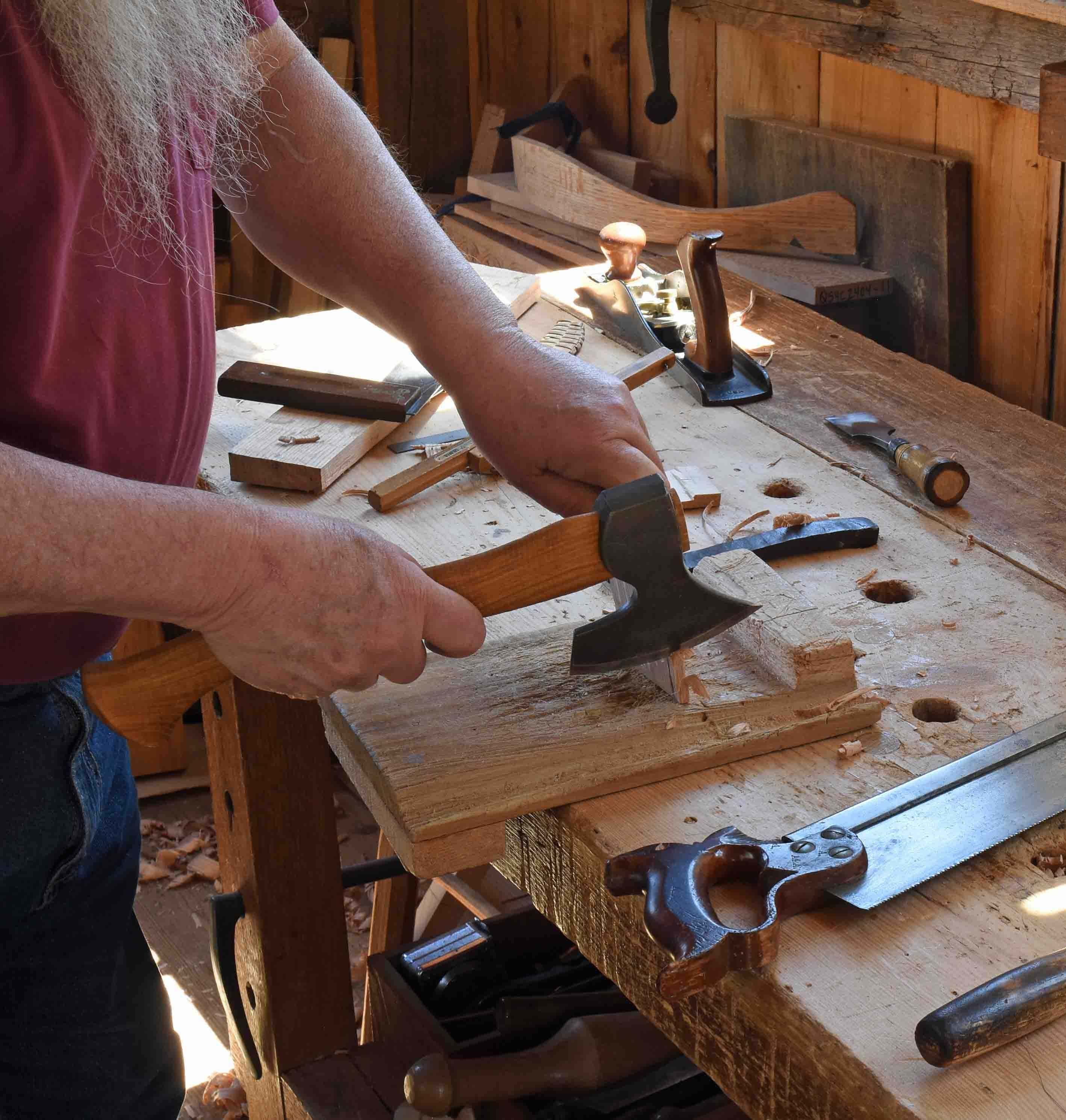
[that’s the Wood Tools’ Sheffield Axe - perfect for shop work like this…
Cleanup can be done with a chisel, a knife or a spokeshave. Sometimes it’s daunting to cut a curve like that by eye. But with practice you get more confidence.
The small compartment in the back corner of the box has a raised platform as a bottom. This produces a shallower compartment - but that bottom extends beyond the front-to-back divider and ultimately houses a tiny drawer. My notes from the first time I built this dressing box had an idea about that platform that creates that raised bottom. I wanted it to extend forward once it’s outside the front to back divider. That makes it more complicated to cut but eventually it means that the tiny drawer won’t be able to slip underneath that platform like my first one did.
