well, there was a slight interruption here recently. Spent much of the past two days shoveling snow. Thankfully, this drift stopped just where I’m standing & I only had to cut through 24-30” to get the path to the shop workable.
shoulder-high snow drift
So much of my time not-shoveling has been reading and writing. Sometimes I sit down to write one blog post & it turns into something completely different from my original intention. This is one of those. I was going to write a short piece about a walnut carving I did recently for a box I’m making. It’ll keep.
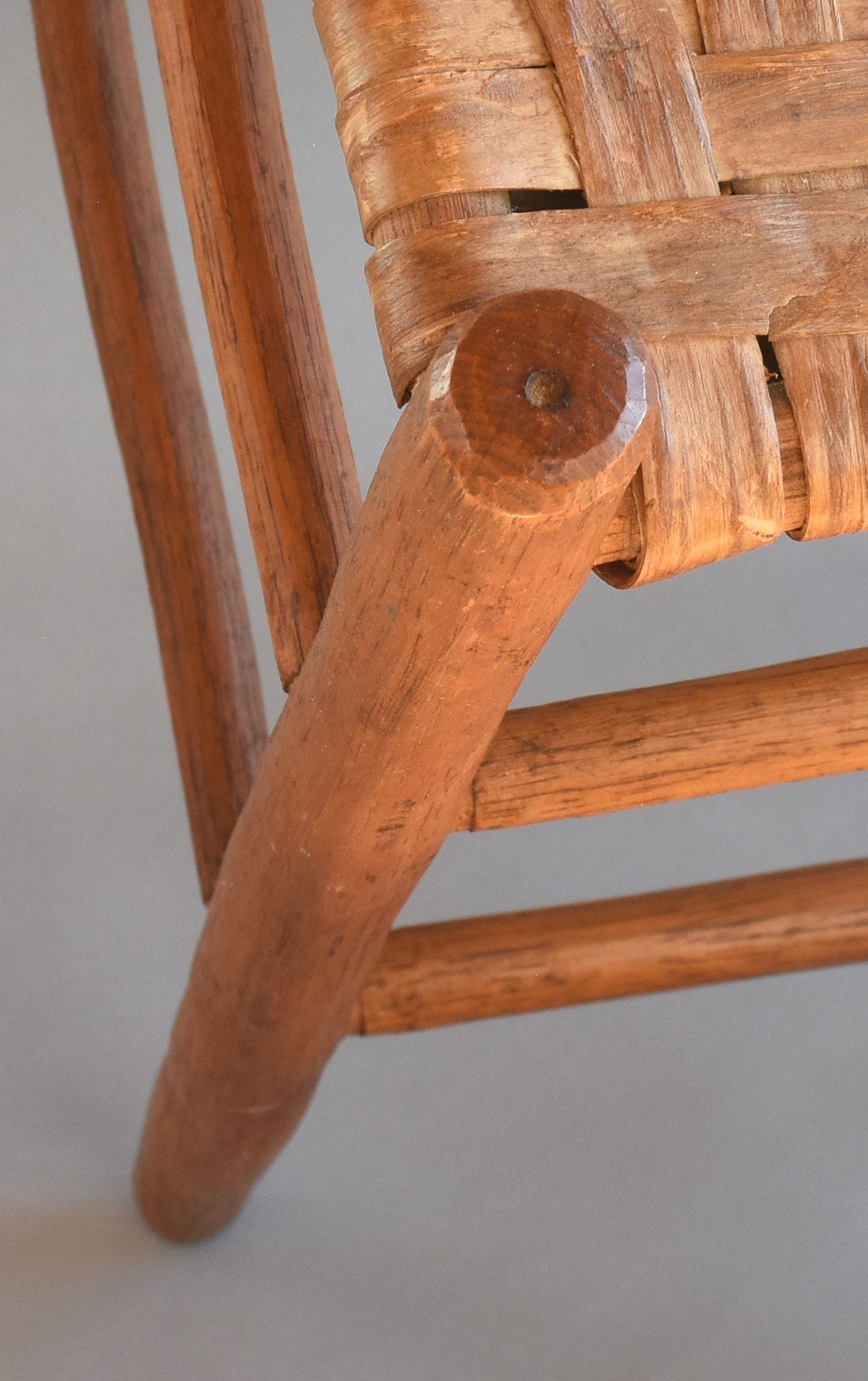
In that post, I showed a bit about the various ways she tried to hold chair parts for drawknife work. All in all, the shaving horse was her preferred method, but that didn’t stop her looking for alternatives. I showed her pipe-clamp & wooden screw low bench system. It pinches the leg between two iron points - as evidenced by the divots in each end:
JA stool w/ marks from holding system
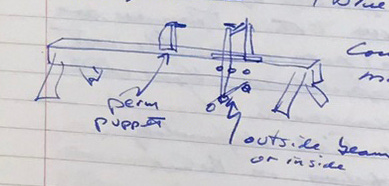
In her notebooks is another sketch - never built as far as I know. Again, this arrangement traps the chair leg (or rung too I guess) between two iron points - as if in a lathe - so you can shave the full length. It’s not easy to come onto a workpiece that way with a drawknife - but it can be done. This one is based on a timber trestle - with a “perm(anent) puppet” somehow fixed at one point, then with the English style shaving horse yoke & treadle arrangement pivoting to pinch the workpiece. I can see several challenges to this - if the stock isn’t just the right length, then that pivoting piece would hit the workpiece at an angle. JA also suggests here that there could be a slot into which a “dumbhead” style shaving horse fixture fits instead of the English version straddling the timber. But doesn’t address the angle issue.
JA sketch of shaving horse, 1979
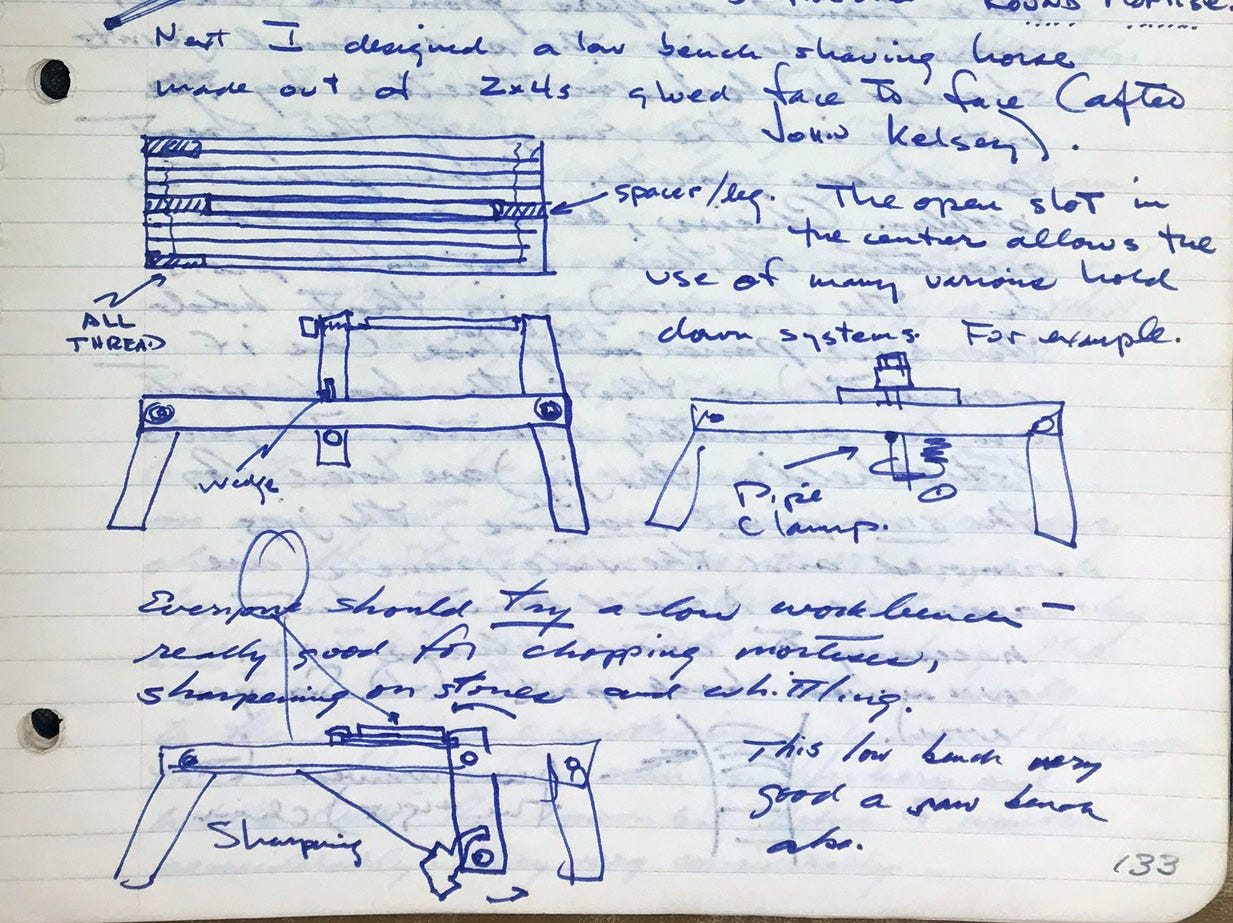
Right around the same time, JA elaborated on (or further complicated) this design. In a letter dated 8/24/79, written right after her first chairmaking course at Country Workshops - (which was really a stool-making course) - she wrote:
At the end of the workshop and shortly thereafter ideas came popping out…Next I designed a low bench shaving horse made out of 2x4s glued face to face (after John Kelsey). The open slot in the center allows the use of many various hold down systems. For example.
Everyone should try a low workbench - really good for chopping mortises, sharpening on stones and whittling. This low bench very good (as) a saw bench also.
The illustration on the left has the same idea as above - a workpiece pinched between two “poppets” or “puppets”, to borrow from lathe terminology.
Continue reading this post for free, courtesy of Peter Follansbee.